
Walmart's Drone Push, Nasdaq Entry, AI & FinTech26
Wed, January 28, 2026Introduction
Last week produced a cluster of tangible developments for Walmart (WMT) that go beyond strategy memos: an announced ramp in drone delivery, formal entry into the Nasdaq‑100, concrete AI and fintech product rollouts, and a structured leadership handoff. These moves are operational in nature and directly affect capital flows, revenue mix, and execution risk for the company. The following article breaks down the specifics, highlights near-term investor implications, and frames what to watch next.
Drone Delivery: From pilot to scale
What changed
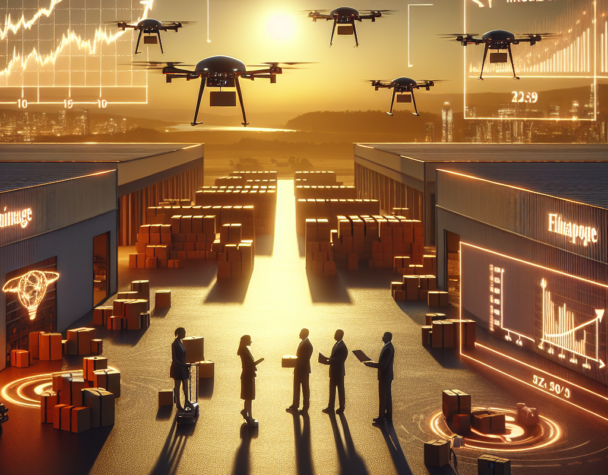
Walmart disclosed plans to substantially expand its drone delivery footprint, targeting roughly 150 additional stores in the coming rollout and aiming for about 270 drone-enabled locations by 2027. That shifts the narrative from experimental pilots to regional scaling across dense U.S. urban corridors where last-mile efficiencies matter most.
Why it matters operationally
Drone delivery impacts three concrete metrics: delivery speed, unit cost for last-mile fulfillment, and customer frequency. Early pilot markets showed faster order-to-door times and higher repeat usage among heavy users. As network density increases, Walmart stands to compress delivery legs and reduce per-order labor expenses versus traditional courier or store-based dispatch models. For investors, the key variables will be realized cost savings (or not) and adoption rates published in subsequent quarterly disclosures.
Nasdaq‑100 Inclusion and Capital Flows
Index mechanics and timing
Walmart’s inclusion in the Nasdaq‑100 (effective January 20, 2026) is more than symbolic. Index reclassification drives systematic demand from passive funds and ETFs that track the Nasdaq‑100 and tech-heavy baskets. Those rebalances tend to create measurable buying pressure around the inclusion date and can improve liquidity and valuation multiples over time.
Investor implications
For WMT, index inclusion broadens the investor base to include funds that previously would not hold the stock. This can reduce bid‑ask spreads and attract tech-oriented analysts who value recurring digital revenue and data assets more richly than traditional retail multiples. Expect short-term rebalancing flows and a medium-term reassessment of WMT’s growth profile as the company executes on digital monetization plans.
AI, Advertising & FinTech: Monetization in motion
Concrete product moves
At CES and in subsequent communications, Walmart showcased monetization levers: ads integrated into its AI shopping assistant (“Sparky”), partnership moves to tie purchase data into influencer and ad strategies with agencies, and planned crypto-related features within its OnePay app—facilitating buy/sell/convert flows for users. Walmart also added software and product leaders to its board, signaling a commitment to accelerate software-led commerce capabilities.
Revenue and margin consequences
These initiatives create higher-margin revenue opportunities distinct from grocery and general merchandise. Advertising revenue and fintech fees typically carry better incremental margins than physical retail sales. The question for investors is timing and scale: will these channels contribute materially within the next 4–8 quarters, and will Walmart disclose meaningful metrics (ARPU, take rates, ad revenues) to validate the transition?
Leadership Transition: Continuity over disruption
Succession specifics
Doug McMillon’s step down and John Furner’s elevation to CEO (with McMillon staying on the board through June 2026 and as an advisor through 2027) is a managed, insider succession. Furner’s background leading U.S. operations and merchandising positions him to prioritize execution of omnichannel and cost initiatives.
Implications for execution risk
Succession can create uncertainty, but a planned handover with the predecessor remaining involved reduces the risk of abrupt strategic shifts. For investors, the leadership change removes a headline risk while placing a premium on Furner’s ability to communicate and deliver on the operational milestones described above.
Conclusion
Last week’s developments move Walmart from promise to measurable scaling: drone infrastructure expansion, Nasdaq‑100 inclusion, early monetization of AI and fintech assets, and a staged CEO transition. Together these items alter how the market may value Walmart—less as a pure bricks‑and‑mortar retailer and more as a tech‑enabled commerce platform. Near-term investor focus should center on fund flows tied to index inclusion, execution and cost metrics for drone deployments, and early revenue readouts from AI advertising and OnePay fintech features. These are concrete, trackable indicators that will determine how meaningfully these operational changes translate into share‑price performance.