
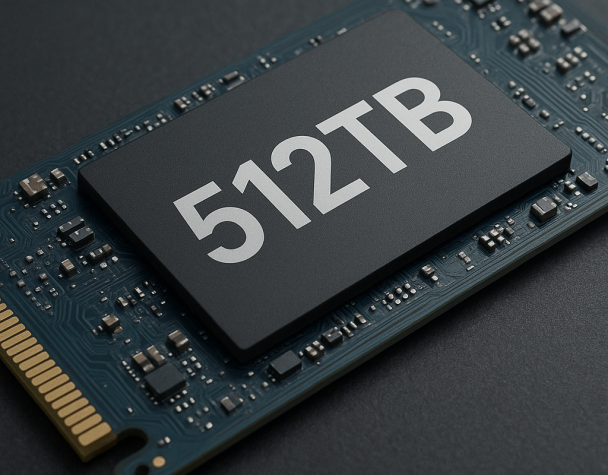
SanDisk's BiCS10 Chip Paves Way for 512TB SSDs by 2027
Sun, July 19, 2026SanDisk’s BiCS10 Chip Paves Way for 512TB SSDs by 2027
SanDisk, in collaboration with Kioxia, has commenced sampling its 10th-generation 3D NAND flash chip, BiCS10, marking a significant advancement toward ultra-high-capacity solid-state drives (SSDs). This development is poised to revolutionize data storage capabilities, with plans to introduce a 512TB SSD by 2027.
Breakthrough in NAND Flash Technology
The BiCS10 chip features a 332-layer architecture, achieving a bit density exceeding 29Gb/mm—a 59% improvement over the previous BiCS8 generation. This enhancement is facilitated by SanDisk’s CMOS-bonded array design and the advanced Toggle DDR6.0 interface, enabling data transfer speeds up to 4.8Gb/s, a 33% increase from prior models. Additionally, the chip boasts improved power efficiency, with input power consumption reduced by 10% and output by 34%.
Roadmap to High-Capacity SSDs
SanDisk’s strategic roadmap includes launching a 256TB SSD in 2026, followed by a 512TB model in 2027. The company also envisions developing a 1PB enterprise drive in the future. These ambitious targets rely on adopting Quad-Level Cell (QLC) memory by 2028, focusing on increasing capacity through additional layers and improved layouts rather than adding more bits per cell.
Market Implications and Cost Considerations
While these advancements promise substantial storage capacities, they come with significant costs. Based on current pricing, a 512TB SSD could exceed $300,000. With NAND supply constraints and rising enterprise demand driven by AI infrastructure, prices are unlikely to decrease in the near future. Competitors like Samsung and Solidigm are pursuing similar goals on comparable timelines, indicating a competitive landscape in high-capacity storage solutions.
Impact on Western Digital’s Market Position
As SanDisk operates under Western Digital Corporation, these technological advancements directly influence Western Digital’s market position. The introduction of high-capacity SSDs aligns with the company’s strategic initiatives, including a $4.0 billion share repurchase program authorized in February 2026, reflecting confidence in its future prospects. Additionally, Western Digital reported a 30% year-over-year revenue increase in Q4 FY2025, underscoring its robust financial performance.
Conclusion
SanDisk’s BiCS10 chip represents a significant leap in data storage technology, setting the stage for ultra-high-capacity SSDs in the coming years. While the associated costs are substantial, the potential benefits for data-intensive industries are immense. As Western Digital continues to innovate and invest in advanced storage solutions, it solidifies its position as a leader in the technology hardware sector.