
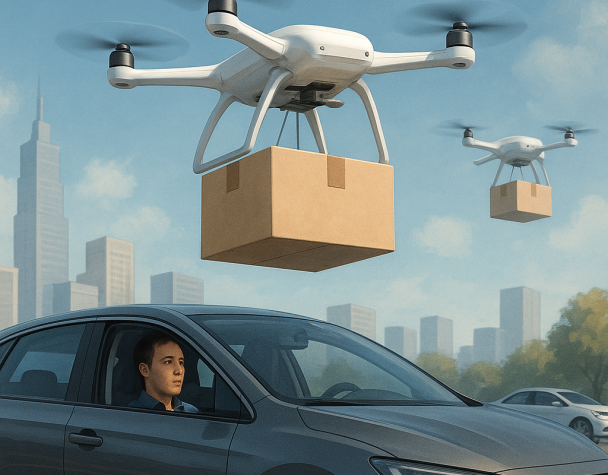
Uber Targets One Million Daily Drone Deliveries by 2029 as Autonomous Rides Gain Momentum
Fri, September 04, 2026Uber Technologies is accelerating its transformation with two major developments in logistics and autonomous mobility that command attention this week.
Ambitious Drone‑Delivery Scale-Up
On August 17, Uber and drone‑delivery specialist Zipline announced a goal of achieving one million Uber Eats drone deliveries per day by the end of 2029. The initiative will begin with drone delivery services in Houston and Dallas later this year, before expanding to multiple U.S. cities. This marks the first full integration of Zipline’s drones into a retailer’s app, positioning Uber at the forefront of combining traditional courier networks with cutting‑edge drone infrastructure.
This move underscores Uber’s strategy to build a hybrid delivery network encompassing couriers, sidewalk robots, and drones—designed to optimize delivery modes and expand its logistics reach. It’s a tangible long‑term expansion of Uber’s delivery capabilities, with potential implications for reducing costs and improving service speed.
Progress in Autonomous Rides Pilot in London
On August 5, Transport for London granted private‑hire vehicle licenses to a fleet of autonomous, all‑electric Ford Mustang Mach‑E vehicles powered by Wayve’s AI technology, enabling Uber to pilot autonomous rides in London under the city’s AV Trialling Code of Practice.
This licensing milestone completes the “triple‑lock” model—ensuring that operator, driver, and vehicle meet all regulatory standards—paving the way for limited trials with a select group of riders later this summer. More than 100,000 Londoners have signed up to participate, signaling strong public interest ahead of wider launch.
Implications for Uber’s Stock and Strategic Position
These developments—Uber’s drone ambition and autonomous vehicle licensing—represent material steps in its long‑term evolution from ride‑sharing to becoming a multi‑modal mobility and delivery platform.
While recent share price data shows Uber trading at $75.96, down 1.78% as of September 3, 2026, these events may recalibrate investor expectations for future growth, especially in high‑margin, scalable segments.
However, it’s important to note that neither development immediately impacts earnings or short‑term profitability. The drone‑delivery target spans multiple years, and the London autonomous rides are still in early pilot stages.
Looking Ahead
Investors should monitor developments in regulatory approvals, pilot rollouts, and operational performance in both initiatives. Key signs to watch include expansion beyond initial cities, cost efficiencies achieved through drones, and consumer adoption metrics in London.
Uber’s vision for integrated logistics and autonomous services is gaining traction—but tangible impact on revenue and margins will likely emerge over time, making these strategic moves important long‑term signals rather than immediate stock drivers.