
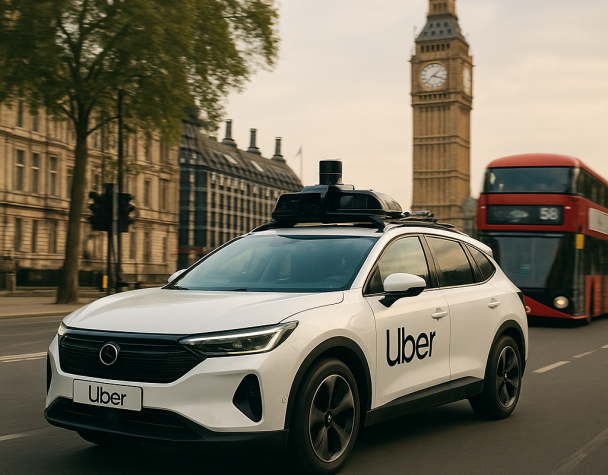
Uber Rolls Out Robotaxi Service in London Amid Major Layoffs — Key Fresh Developments in Transportation Tech
Fri, September 11, 2026Uber this week unveiled two significant developments that could reshape its near-term trajectory in the transportation and technology sectors. The company launched a robotaxi pilot in London in partnership with autonomous driving firm Wayve, and simultaneously commenced its largest workforce reduction since the pandemic—cutting approximately 10% of staff in a strategic restructuring. Both moves carry implications for Uber’s financial and technological positioning.
Uber and Wayve Launch London Robotaxi Pilot
On September 4, 2026, Uber and Wayve debuted a robotaxi service in London, featuring autonomous vehicles operated with safety drivers aboard. The pilot is among the first of its kind in the region, marking a concrete step toward integrating self-driving technology within Uber’s rideshare platform. This London rollout is framed as a key milestone toward broader autonomous mobility expansion.
The formal London launch represents tangible progress in Uber’s autonomous strategy, which aims to combine its global ride‑hailing footprint with emerging self‑driving capabilities. While the pilot is still in early stages, it helps position Uber at the forefront of autonomous mobility innovation in a major metropolitan market.
Uber Implements Largest Layoffs Since Pandemic
Concurrently, Uber is undergoing a significant internal restructuring, laying off 10% of its global workforce—the largest cutback since the onset of the pandemic. This move entails halving micro-team structures, underscoring a focused effort to streamline operations and reduce complexity. The layoffs were announced around September 4–5, 2026.
These workforce reductions may boost short-term cost efficiency, potentially reallocating resources toward strategic initiatives such as autonomous vehicle development. However, investor response and market interpretation will hinge on how these savings translate into execution in innovation, service reliability, and financial performance.
Why These Developments Matter for Uber Investors
The robotaxi pilot aligns with Uber’s longer-term goal of integrating autonomous technology, which could lower cost-per-ride, reduce reliance on human drivers, and improve safety and margins. The London test serves as a real-world lab to validate technology and user adoption before scaling more broadly.
On the operational front, a 10% staff reduction is a sizeable move that could help Uber reallocate capital toward innovation, especially at a time when autonomous systems are resource-intensive. It signals financial discipline but also bears potential risks if key talent or institutional knowledge is lost.
Outlook and Investor Considerations
Investors should monitor how the London robotaxi pilot evolves operationally: whether it expands in scale, regulatory approval dynamics, performance metrics, and cost trajectories. Equally, the layoff plan’s impact on operational capacity, innovation momentum, and team morale bears watching.
While there is no direct link yet between these developments and short-term stock movement, together they highlight Uber’s balancing act between modernizing its technology platform and optimizing its organizational structure. Both warrant attention as they may shape Uber’s strategic direction and investor sentiment in Q4 and beyond.