
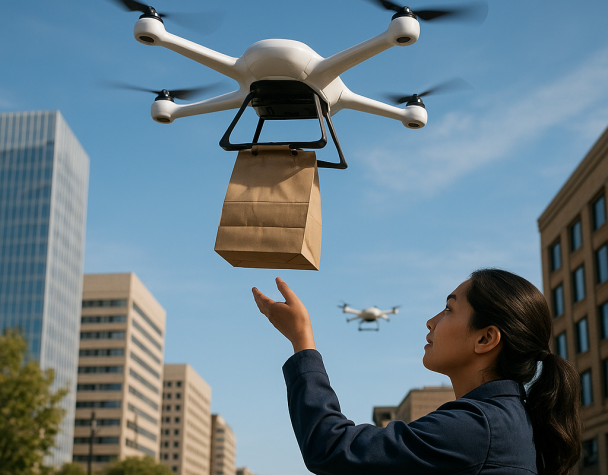
Uber Embarks on Ambitious Zipline Drone Push to Transform Eats Delivery by 2029
Fri, August 28, 2026Uber Technologies this week announced a major expansion in its delivery operations, unveiling a partnership with drone delivery specialist Zipline. The collaboration is part of Uber’s long-term push to enhance Uber Eats’ capabilities, with the companies aiming to complete one million drone deliveries per day by the end of 2029.
According to TechCrunch, Uber plans to deploy Zipline’s drones for the first Uber Eats deliveries by the end of this year, initially in markets where Zipline already operates. From there, the service is expected to expand to “dozens of U.S. cities.” The ambitious goal: reach one million deliveries per day via drone by 2029. Uber has not disclosed the investment amount in Zipline, but the move marks a significant bet on drone logistics innovation. Uber has previously explored aerial logistics through its now-defunct Elevate and Autonomous Technologies Group, and more recently partnered with Israeli drone startup Flytrex as well. This approach underscores Uber’s strategy to leverage multiple technology providers for future delivery automation.
This development could hold particular relevance for investors watching Uber’s future growth trajectory. The planned drone capability may strengthen Uber Eats’ competitive edge by accelerating delivery times and setting a new standard for delivery speed—potentially as fast as five to ten minutes per order. The move also underscores Uber’s continued experimentation with delivery innovation after winding down its in-house autonomous vehicle divisions.
While Uber’s share price performance this week reflected a modest decline—posting a 2.38% drop and subtracting 0.2 points from the S&P 500’s total movement on August 26—there is no clear market reaction attributed to the drone announcement. Investors will likely monitor how quickly Uber can scale the program, regulatory hurdles, execution risks, and whether faster delivery translates into cost efficiencies or margins for Uber Eats. As of August 27, Uber was trading at $76.95, down 0.91% that day.
In the near term, the impact of the Zipline partnership may be more strategic than immediate. Nonetheless, the initiative provides a compelling look into what Uber envisions for the future of last-mile logistics. Over the coming quarters, investors should focus on pilot outcomes, expansion cadence, regulatory developments, and whether drone delivery begins to influence Uber’s delivery economics.