
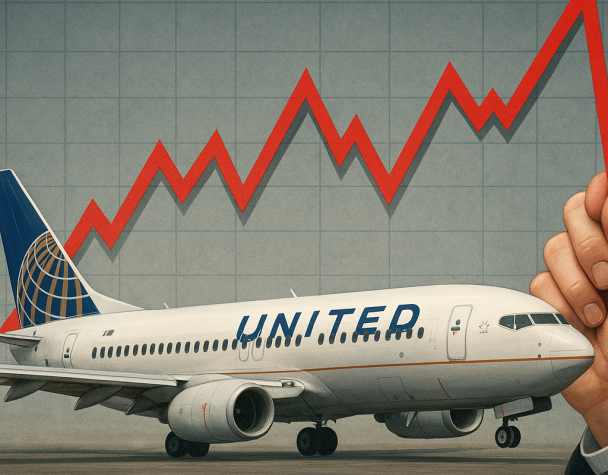
United Airlines Stock Faces Volatility Amid Profit Guidance Adjustments and Analyst Reactions
Sun, July 12, 2026United Airlines Stock Faces Volatility Amid Profit Guidance Adjustments and Analyst Reactions
United Airlines Holdings Inc. (NASDAQ: UAL) has recently experienced notable stock price fluctuations, influenced by adjustments in profit guidance and subsequent analyst reactions.
Profit Guidance Revision
In April 2026, United Airlines reported strong first-quarter results, with revenue reaching $14.61 billion and net income of $699 million. Despite these positive figures, the company revised its full-year 2026 earnings per share (EPS) guidance downward to a range of $7.00 to $11.00, a significant reduction from the previous forecast of $12.00 to $14.00. This adjustment was primarily attributed to rising jet fuel costs and the introduction of new fees, including a cargo “market disruption fee,” which have impacted pricing and capacity decisions.
Analyst Reactions
Following the revised guidance, several financial institutions have updated their outlook on United Airlines:
- Barclays: Reiterated an “Overweight” rating with a price target of $150.00, acknowledging the challenges posed by increased fuel costs but expressing confidence in the airline’s strategic direction.
- TD Cowen: Raised its price target to $176 from $150, maintaining a “Buy” rating, reflecting optimism about United’s long-term growth prospects.
- Goldman Sachs: Increased the price target to $162 from $131, also keeping a “Buy” rating, indicating a positive outlook despite near-term challenges.
Market Performance
As of July 11, 2026, United Airlines’ stock is trading at $126.00, reflecting a 2.14% decrease from the previous close. The stock has experienced an intraday high of $133.18 and a low of $124.44, with a market capitalization of approximately $40.9 billion. The price-to-earnings (P/E) ratio stands at 11.27, based on an earnings per share (EPS) of $11.18.
Industry Context
The airline industry is currently navigating a complex environment marked by fluctuating fuel prices and evolving demand patterns. The International Air Transport Association (IATA) recently revised its global airline net profit forecast for 2026 to $23 billion, down from the previous projection of $41 billion. This adjustment underscores the broader challenges faced by airlines, including United, in managing operational costs and maintaining profitability.
Conclusion
United Airlines’ recent stock volatility reflects the broader industry’s challenges, particularly concerning rising operational costs and profit margin pressures. While the company has demonstrated resilience through strong revenue figures and strategic initiatives, investors should remain attentive to ongoing developments in fuel prices, regulatory changes, and competitive dynamics that may influence United’s financial performance in the coming quarters.