
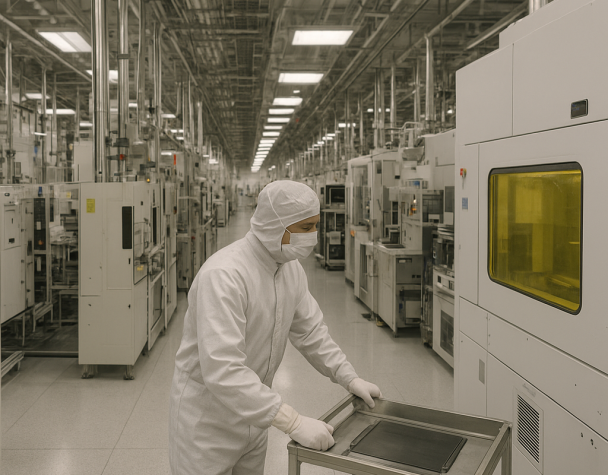
Inside Texas Instruments’ Sherman Fab: A Rare Look at Domestic Manufacturing as Analog-Chip Demand Rises
Mon, September 07, 2026A new Axios profile published five days ago offers an in-depth tour of Texas Instruments’ semiconductor manufacturing facility in Sherman, Texas, underscoring the company’s sustained commitment to U.S.-based production even as its core analog-chip business remains under pressure.
The article revisits TI’s identity beyond its familiar graphing calculator image, reminding readers that semiconductors represent its primary revenue stream. The Sherman facility features prominently in this narrative, illustrating how TI continues to build and maintain critical analog manufacturing capacity within the U.S.
While the Axios story does not link this facility directly to any recent earnings or stock movement, it arrives amid broader industry narratives suggesting resilience in industrial and automotive analog demand—key end markets for TI. Such narratives stem from second-quarter results released in July, where the company delivered revenue of $5.46 billion and earnings per share of $2.14, exceeding expectations and signaling signs of stabilization in analog chips .
This behind-the-scenes look at TI’s Sherman factory provides investors and tech observers with concrete evidence of the company’s manufacturing footprint, including its ability to sustain operations when many competitors rely heavily on outsourced or overseas production. It serves as a timely reminder of TI’s industrial foundation at a moment when analog-chip cycles are rebounding.
Given the lack of direct price movement tied to the Axios feature, it remains a supportive—and reaffirming—development rather than a market mover. Nonetheless, the article holds strategic significance: it highlights TI’s manufacturing independence and operational robustness, reinforcing investor confidence in the company’s long-term analog-market positioning.
Key takeaway: The inside look at the Sherman fab confirms Texas Instruments’ continued investment in domestic analog manufacturing amid a gradual recovery of analog-chip demand, offering tangible context to the company’s July earnings beats and bolstering its narrative of industrial stability.