
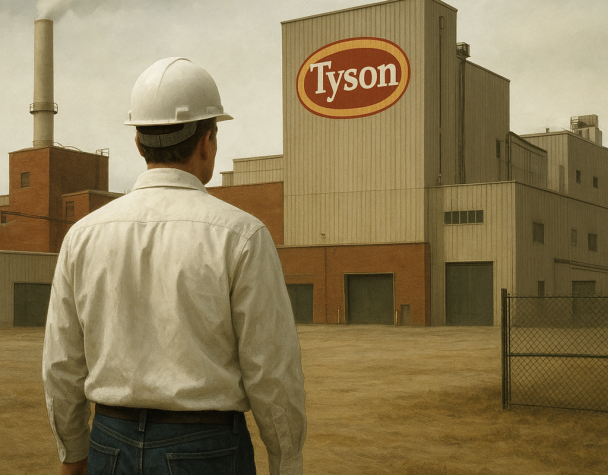
Tyson Foods’ Beef Closures Continue to Reshape Processing Network Amid Ongoing Cattle Shortage
Mon, October 05, 2026Tyson Foods (NYSE: TSN) this week confirmed it will pursue the sale of its beef processing plant in Pasco, Washington, continuing a broader strategy to realign operations as U.S. cattle supplies remain at multi‑decade lows.
This announcement comes days after the company closed two other beef facilities: its beef plant in Joslin, Illinois, and a case‑ready facility in Eagle Mountain, Utah. The Joslin facility ceased harvest operations around August 13 and fully shuttered by August 14, affecting thousands of employees and key regional cattle suppliers. Operations will now consolidate around Tyson’s remaining beef facilities in Dakota City, Nebraska; Holcomb, Kansas; and Amarillo, Texas. In Amarillo, the company plans to restore a second shift as cattle availability improves. These actions remain central to Tyson’s effort to optimize its footprint amid persistent supply constraints.
The underlying catalyst remains the historic U.S. cattle shortage—the smallest herd in approximately 75 years—which continues to pressure the beef segment’s performance. Tyson and industry analysts estimate the company’s daily cattle slaughter capacity has declined by roughly 10,000 head since the start of 2025. These shifts are designed to improve utilization and profitability by focusing operations on higher‑efficiency sites.
S&P500 investors should note that Tyson’s stock price, currently $51.89 as of October 2, 2026 (up 2.49% intraday), reflects the ongoing rebalancing challenges in beef, even as losses mount in that segment.
Why It Matters
For shareholders, the strategic closures and capacity realignment signal Tyson’s attempt to strengthen margins and mitigate losses in its beef business amid supply headwinds. Redirecting processing volume to core assets may support longer‑term cost control, though near‑term headwinds remain.
For the broader beef supply chain, the plant shutdowns—especially the weighty and abrupt closure of the Joslin facility—have disrupted regional logistics. Producers now face increased transportation distances and costs, as the nearest processing alternatives may be 150 miles or farther away. While analysts believe U.S. packing capacity remains sufficient nationally, local disruptions could strain uptime and cost structures.
Looking Ahead
Investors should watch for:
- Any updates on the sale of the Pasco plant and the timeline for its transition.
- Cattle supply and pricing trends, particularly following recent USDA decision to resume live cattle imports from Mexico—expected to ease supply pressures but likely with limited immediate impact.
- Tyson’s beef segment financial results—loss trajectory, operating margins and capacity utilization—as the company implements its restructuring.
While Tyson’s share price rise today may partly reflect confidence in these operational adjustments and stabilization efforts, the company remains exposed to macro‑level cattle dynamics and regional disruption risks.