
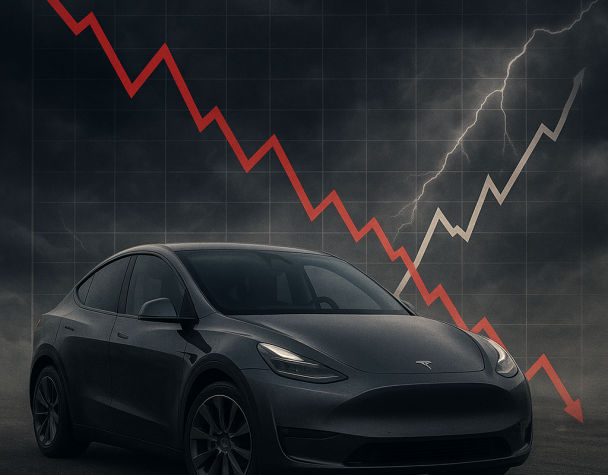
Tesla's Stock Faces Volatility Amid Regulatory Challenges and Market Dynamics
Sun, July 12, 2026Tesla’s Stock Faces Volatility Amid Regulatory Challenges and Market Dynamics
In the past week, Tesla Inc. (NASDAQ: TSLA) has experienced notable stock price fluctuations, influenced by regulatory developments and market dynamics. As of July 10, 2026, Tesla’s stock closed at $407.76, reflecting a 0.67% decrease from the previous close.
Regulatory Scrutiny in New Jersey
One significant factor impacting Tesla’s stock is the potential regulatory challenge in New Jersey. State legislators are considering a law that could ban the operation of autonomous ride-hailing services, commonly referred to as robotaxis. This proposed legislation poses a direct threat to Tesla’s plans for expanding its Full Self-Driving (FSD) capabilities and deploying robotaxis in the region. The outcome of this legislative process remains uncertain, and investors are closely monitoring the situation.
Analyst Perspectives and Market Sentiment
Analyst opinions on Tesla’s stock have been mixed. Citizens initiated coverage with a “Market Perform” rating, expressing caution about the rapid scaling of Tesla’s robotaxi services. The firm anticipates a slower ramp-up than previously expected, which could impact Tesla’s revenue projections in the near term. This cautious outlook has contributed to the recent dip in Tesla’s stock price.
Conversely, some analysts remain optimistic about Tesla’s long-term prospects. UBS raised its price target for Tesla to $442, citing confidence in the company’s ability to navigate regulatory challenges and capitalize on its technological advancements. This divergence in analyst opinions reflects the broader market’s uncertainty regarding Tesla’s future performance.
Market Dynamics and Competitive Landscape
Beyond regulatory challenges, Tesla faces a dynamic market environment. The demand for used electric vehicles (EVs) has surged, driven by rising fuel prices and increased consumer interest in sustainable transportation options. Tesla’s models continue to lead the pre-owned EV market, indicating strong brand loyalty and product desirability.
However, competition in the autonomous vehicle sector is intensifying. Companies like Waymo are making significant strides in deploying robotaxis, potentially challenging Tesla’s market position. Tesla’s ability to innovate and adapt to these competitive pressures will be crucial in maintaining its leadership in the EV and autonomous driving markets.
Conclusion
Tesla’s recent stock volatility underscores the complex interplay between regulatory developments, analyst perspectives, and market dynamics. While challenges such as potential regulatory restrictions in New Jersey and competitive pressures exist, Tesla’s strong brand presence and ongoing technological advancements position the company to navigate these hurdles. Investors should remain vigilant, considering both the risks and opportunities as Tesla continues to evolve in the rapidly changing automotive and clean energy sectors.