
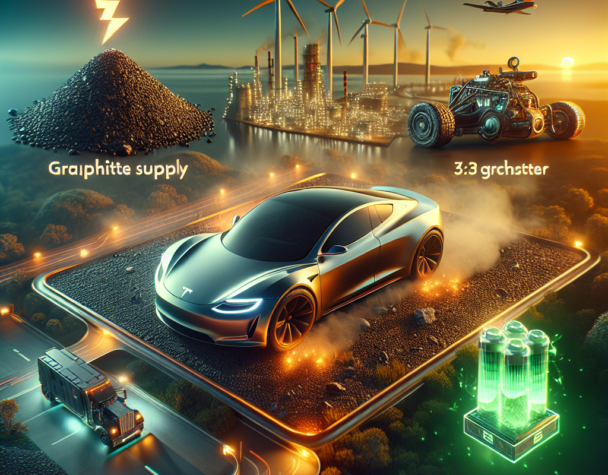
Tesla: Syrah Graphite, Roadster Patents, ESG Boost
Mon, March 09, 2026Introduction
The last week brought a cluster of tangible developments for Tesla (TSLA) that matter to shareholders: a stretched graphite-supply timeline with Syrah Resources, patent filings signaling progress on the next-generation Roadster, and a notable improvement in battery-manufacturing ESG metrics. These items are concrete — not speculative — and they influence production risk, product narrative, and investor appetite in different ways.
Supply-Chain Spotlight: Syrah’s Graphite Deadline Extension
Syrah Resources has extended the deadline related to its graphite supply arrangement with Tesla for the third time, moving the target date to March 16, 2026. That repeated extension underscores a binary reality: either Syrah meets Tesla’s specifications or Tesla must pivot to alternate graphite sources. For investors, the importance is straightforward.
Why this matters for TSLA
Graphite is a core battery anode material. A reliable, cost-effective domestic supplier helps Tesla control battery cost, lead times, and U.S. supply-chain optics. Continued uncertainty raises two direct risks:
- Production-cost pressure if Tesla must source higher-cost graphite or revise cell chemistry.
- Near-term volatility in sentiment and share price if market participants view the extension as a failing limb of Tesla’s domestic sourcing strategy.
Think of the relationship as a key supplier holding a slow-moving but critical shipment: the longer the shipment is delayed, the more likely the manufacturer adjusts production plans or pays a premium to avoid interruptions.
Product Momentum: Next-Gen Roadster Patents
Tesla’s recent patent filings for one-piece seats tied to the next-generation Roadster represent tangible engineering progress. Patent activity often precedes public reveals and limited-production ramps; in this case, it indicates the Roadster program is moving beyond concept-stage design work to component-level engineering.
Implications for investors
While the Roadster itself won’t materially affect Tesla’s near-term volume, it serves several strategic functions:
- Brand halo: High-performance models raise brand visibility and can indirectly lift demand for mainstream models.
- Technology proof points: Innovations developed for a premium flagship often cascade into mass-market vehicles or manufacturing techniques.
- Sentiment catalyst: Patent filings and product teasers can drive short-term positive headlines and trading interest.
ESG Recognition: Improved Battery Manufacturing Scores
A recent battery-manufacturing scorecard placed Tesla at the top, with a marked year-over-year improvement. Improved ESG rankings are more than public-relations wins; they influence fund flows. Many institutional and index funds apply ESG screens that affect portfolio inclusion, and better scores can widen the pool of buyers for TSLA stock.
How ESG gains translate to capital flows
ESG improvements can increase demand from sustainability-focused ETFs and mutual funds, creating a steady buyer base that may reduce share-price volatility during broader sell-offs. While the inflows are rarely sudden, cumulative ESG momentum supports a firmer valuation floor.
Combined Investor Takeaways
These three developments interact in concrete ways:
- Supply risk (Syrah) is the primary near-term operational concern; failure to secure graphite on acceptable terms could pressure margins and prompt production adjustments.
- Product progress (Roadster patents) enhances narrative and potential investor excitement ahead of staged reveals and any subsequent demonstrations.
- ESG leadership improves access to institutional capital and can stabilize investor sentiment over time.
For active investors, the practical approach is to track filings and deadlines from Syrah and Tesla, monitor any Roadster technical releases or demos that could shift sentiment, and observe fund flows into ESG-tilted vehicles that include TSLA.
Conclusion
Last week’s developments for Tesla are concrete: a third extension on a graphite supply deadline, patent filings pointing to forward progress on the Roadster, and an improved battery-manufacturing ESG ranking. Each item carries distinct implications for Tesla’s operations and investor outlook. Short-term trading may react most to supply-chain clarity from Syrah, while product patents and ESG gains support medium-term sentiment and institutional interest.
These are developments worth following closely because they impact tangible levers — cost, product capability, and capital access — that drive TSLA’s valuation beyond headline speculation.