
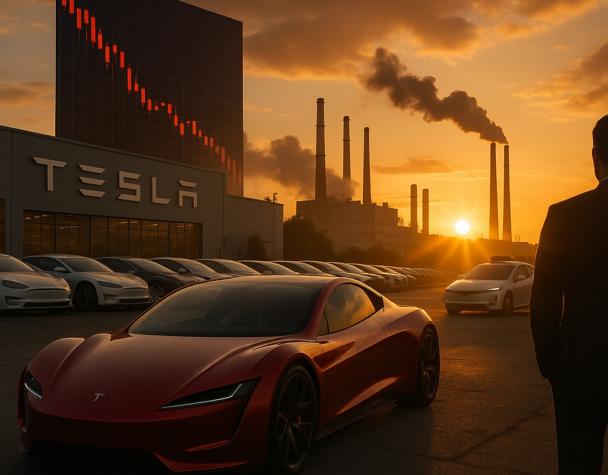
Tesla Shakeup: China Sales, Cash Burn & Robotaxi!!
Mon, March 23, 2026Introduction
Tesla (TSLA) sits at an inflection point this week after a string of tangible developments that directly affect its earnings profile and strategic roadmap. Strong operational signals—most notably a 91% year-over-year surge in February China-made sales—are colliding with sobering analyst revisions, a projected negative free-cash-flow outlook, shifts in high-margin regulatory-credit revenue, growing robotaxi competition and regulatory attention, and notable executive turnover. These events offer clear, near-term implications for investors tracking Tesla within the Nasdaq-100.
China Sales Surge vs. Wall Street Cuts
The data
Tesla reported an impressive 91% year-over-year increase in China-made vehicle sales for February. That kind of growth in its largest individual market is the kind of operational data point that usually buoy investor sentiment.
Why forecasts fell anyway
Despite localized strength, analysts lowered 2026 delivery-growth estimates from higher levels to roughly 3.8% and flagged a turning point in cash generation—projecting Tesla’s free cash flow could swing negative (around a -$5.19 billion estimate highlighted by several coverage notes). In short, strong sales volume in one geography is being weighed against corporate-level profitability and capital-intensity concerns.
Investor takeaway
Think of Tesla’s situation like a high-performing engine that’s burning more fuel than expected: the China engine is roaring, but the overall treasury signals that more capital will be required to fund ambitious projects. That mismatch often compresses near-term valuations even if long-term potential remains intact.
Cash Flow Pressure and Shrinking Regulatory-Credit Revenue
Regulatory credits: a meaningful, declining line
Regulatory credits have been a valuable, high-margin revenue source for Tesla. Recent reports show a 28% drop in regulatory-credit revenue in 2025, down to about $1.99 billion, driven in part by the shrinking pool of partners in Tesla’s EU carbon-credit arrangements—notably, Stellantis, Toyota and Subaru stepped away from the 2026 pool after participating in 2025.
Implications for the P&L and cash flow
When a company loses a predictable, outsized margin stream, headline profitability and free cash flow forecasts are directly affected. If Tesla’s operational investments (Autonomy, factories, product development) accelerate while regulatory-credit income declines, expect tighter near-term operating leverage—hence the analyst concerns about negative free cash flow.
Robotaxi Race: Competition and Regulatory Scrutiny
Competitive moves
Amazon-backed Zoox has expanded testing beyond initial locations into cities such as Dallas and Phoenix, intensifying direct competition in autonomous ride services. Tesla’s robotaxi ambitions—once seen as a potential multi-year revenue compactor—are now facing competitors that are narrowing the gap in real-world testing and city deployments.
Regulatory dynamics
U.S. regulators are convening forums on driverless-vehicle policy and safety. Increased regulatory scrutiny generally favors competitors who have deeper engagement with authorities and established testing footprints. Tesla’s mismatch in logged driverless miles compared with some rivals can raise both execution risk and timeline uncertainty for full autonomy commercialization.
What this means for TSLA
Autonomy is a cornerstone of Tesla’s longer-term valuation narrative. As rivals scale testing and regulatory attention intensifies, conviction in Tesla’s lead can waver—potentially compressing its valuation multiple even if eventual success remains possible.
Executive Turnover and Governance Signals
Key departure
Sendil Palani, Tesla’s longtime vice president of finance, left the company after 17 years. Turnover in senior finance roles is notable when a company faces tightening cash dynamics and rising capital needs.
Investor interpretation
Executive departures at critical junctures can intensify concerns over execution and financial stewardship. Investors tend to prefer stability when forecasts are being revised downward and big strategic bets (robotaxi, new Roadster launch) require careful resource allocation.
Product Catalyst: Roadster Reveal and IP Signals
Short-term sentiment boost
Tesla is preparing a next-generation Roadster reveal slated for late April and has filed patents related to one-piece seats for the model. While low in near-term revenue impact, a high-profile product unveil can generate positive sentiment and momentary upside in the share price—particularly if it reinforces Tesla’s innovation narrative.
Longer-term brand effect
Performance halo products like the Roadster help sustain Tesla’s premium image and can support price elasticity across the lineup. Investors sometimes reward such brand-strengthening moves with higher multiples, but that effect is generally transient unless paired with improved margins or clearer monetization pathways.
Conclusion
Tesla’s recent week of news presents a mixed but concrete picture: robust China sales demonstrate demand resilience, yet analysts have trimmed forecasts amid projected negative free cash flow. The company also faces shrinking regulatory-credit revenue, an intensifying robotaxi competitive and regulatory environment, and management turnover—while the Roadster reveal offers a near-term sentiment event. For investors, the key is separating transient sentiment catalysts from structural changes to earnings power: near-term volatility is likely, and valuation will hinge on whether Tesla can convert product and autonomy promises into sustainable, cash-generating operations.
Keywords: Tesla, TSLA, Nasdaq-100, China sales, free cash flow, regulatory credits, EU carbon credits, robotaxi, Zoox, Roadster, executive turnover, autonomy, investor implications.