
Targa Resources: Permian Growth and Carbon Wins Q1
Tue, March 31, 2026Introduction
Targa Resources (TRGP), now a constituent of the S&P 500, saw a string of concrete industry updates this week that affect its flow volumes, capital plans, and ESG positioning. Key developments include a fresh U.S. Energy Information Administration (EIA) revision to Permian production estimates and continued company-level investment in processing and carbon-capture assets. These items collectively sharpen visibility on near- to medium-term throughput and revenue drivers without relying on speculative headlines.
What the EIA Update Means for Permian Supply
New formations added — quantified impact
The EIA expanded its Permian coverage to include four additional tight oil and shale gas formations. Its revision adds roughly 200,000 barrels per day (bpd) of crude and about 800 million cubic feet per day (MMcf/d) of gas to projected 2025 output. While those figures represent a modest share of total Permian production, they are meaningful for midstream operators because incremental upstream supply tends to flow into existing gathering and processing systems rather than distribute evenly.
Why incremental volumes matter to midstream players
Think of midstream networks like a highway system: a new oil or gas well is another vehicle entering the lanes. Even a small percentage increase in peak traffic can require lane expansions, additional exit ramps (processing capacity), or scheduling changes (take-or-pay contracts). For Targa, incremental Permian oil and gas translates into more feedstock for its gathering pipelines, gas plants, and fractionation trains — and therefore the potential for higher utilization and EBITDA under existing takeaway agreements.
Recent Company Actions: Capacity and Carbon Capture
Concrete projects—Yeti II and Train 13
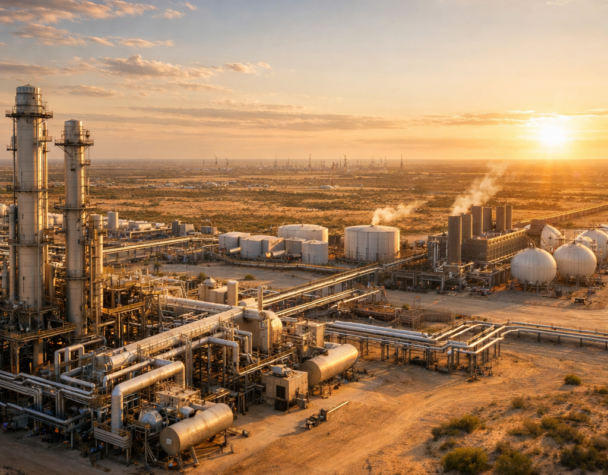
Targa has signaled continuing capital commitment in the Permian and Gulf Coast. The company disclosed construction of a new Permian Delaware gas processing plant (Yeti II) with approximately 275 MMcf/d nameplate capacity, targeted for service by late 2027. Separately, Targa is progressing on a Mont Belvieu fractionator (Train 13) sized near 150,000 barrels per day, with startup expectations in the early 2028 window. These projects are multi-year value drivers: once operational they increase the firm’s ability to monetize both natural gas liquids (NGLs) and gas flows.
Carbon capture integration and recent acquisitions
Recent midstream deals have increasingly embedded carbon-capture capabilities, and Targa’s transactions are no exception. Acquisitions that include emissions-management or carbon-capture assets position Targa to benefit from federal incentives (for example, tax credits for captured CO2) and from offtake partnerships with emissions-conscious producers. This makes the company’s growth pathway not only volume-focused but also aligned with regulatory and investor emphases on emissions mitigation.
Sector Context and Competitive Signals
Peer activity and regional buildouts
Adjacent M&A in basins like the Eagle Ford, where operators have aggregated drilling inventories and acreage, reinforces a broader theme: upstream growth remains basin-specific and can shift regional flow patterns. For Targa, whose footprint spans key Permian corridors and Gulf Coast fractionation hubs, the competitive implication is twofold: capture additional Permian volumes while defending share in Gulf Coast processing and fractionation as peers expand capacity.
Practical investor takeaways
Investors should treat the EIA revision and Targa’s capital programs as tangible inputs to volume and margin forecasts rather than high-level sentiment. Incremental Permian output supports utilization backing for new plants and fractionators, and carbon-capture assets may unlock subsidy or contractual benefits that enhance long-term cashflow resilience.
Conclusion
In the past week, concrete data and company disclosures have reduced uncertainty around two of the most important levers for TRGP: feedstock volumes and strategic asset mix. The EIA’s addition of Permian formations provides a non-speculative supply tailwind, while Targa’s ongoing projects (Yeti II and Train 13) and carbon-capture-linked acquisitions add capacity and optionality. Together, these developments give investors clearer, measurable factors to incorporate into valuation and cashflow models for Targa Resources.