
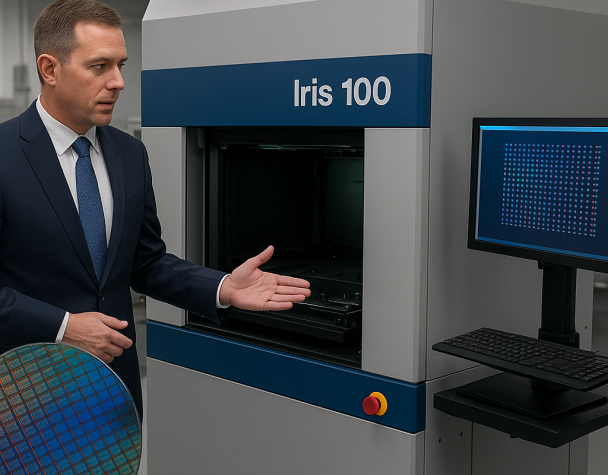
Teradyne Unveils Iris 100 Test System for MicroLEDs, Highlighting Next‑Gen Semiconductor Expansion
Sat, September 26, 2026Teradyne this week unveiled the Iris 100, a new production‑proven test system designed specifically for microLED devices, signaling the company’s deepening focus on advanced semiconductor testing applications.
Introduced via a press release dated September 21, 2026, the Iris 100 adds to Teradyne’s expanding portfolio of test solutions, aligning with the company’s strategic momentum in next‑generation semiconductor and display technologies.
Expanding into MicroLED Testing
The Iris 100 caters to microLED device manufacturers—a growing segment driven by demand for high‑performance, energy‑efficient display technologies in areas such as augmented reality, wearables and compact screens. By offering a production‑hardened solution in this space, Teradyne positions itself to capture early design‑win opportunities as microLED production scales.
This development follows several recent launches in Teradyne’s semiconductor test lineup: in early September, the company debuted the UltraFLEXplus instruments targeting AI and data‑center computing devices, and in mid‑September it opened a dedicated office in India, reinforcing its commitment to emerging semiconductor markets.
Context within Teradyne’s Recent Momentum
Teradyne’s robotics division has also shown remarkable progress. In the second quarter of 2026, the division generated a record $100 million in revenue—its highest quarterly result ever—fueled by a 50 percent sequential surge in orders from electronics and semiconductor manufacturers focused on AI data‑center buildouts. That surge helped electronics and semiconductor markets overtake automotive and general manufacturing to become the robotics unit’s largest end market for the first time.
Although that robotics milestone occurred in Q2, the Iris 100 introduction reinforces Teradyne’s broader strategy of aligning testing and automation solutions with accelerating AI and display device manufacturing trends.
Investor Perspective and Stock Context
As of September 25, 2026, Teradyne shares are trading at $398.38, reflecting a modest gain of 0.89 percent. While recent share gains are modest, the introduction of the Iris 100 and the robotics unit’s record quarter underscore the company’s growing role across multiple segments of the semiconductor equipment and automation markets.
This diversified strength may bolster investor confidence as Teradyne leverages AI‑driven robotic demand alongside next‑gen testing opportunities such as microLEDs.
Why This Matters
Teradyne’s Iris 100 launch signals a strategic pivot to support micro-scale, high‑precision semiconductor test requirements that are emerging rapidly. Given the strong performance in its robotics division, this expansion into microLED testing could deepen Teradyne’s penetration into high‑growth, high‑value segments of the semiconductor ecosystem.
Investors and industry watchers should monitor adoption of Iris 100 by device manufacturers and any corresponding update in Teradyne’s revenue guidance or segment reporting in upcoming earnings releases. The convergence of robotics-driven AI infrastructure demand and next‑gen display testing could position the company for sustained, multi‑segment growth.