
Teradyne Rallies After Cantor; Photon100 Demand Up
Tue, April 07, 2026Introduction
Teradyne (TER) attracted renewed investor interest this week after a string of concrete company events: a bullish Cantor conference presentation, a high-profile presence at SEMICON China with the Photon 100 photonics tester in focus, and a sector-wide pullback tied to regulatory headlines. These developments offer clearer near-term signals for equipment demand, execution risk, and geopolitical sensitivity that matter directly to TER’s stock performance.
What moved the stock this week
Cantor Conference: Strategy and Credibility
Teradyne’s management presentation at the Cantor Global Technology & Industrial Growth Conference emphasized the company’s AI-driven roadmap and its 25-year operating history in China. Investors reacted positively: the day after the presentation TER shares jumped more than 5% on elevated volume. The takeaway was straightforward—leadership reaffirmed product priorities and customer continuity, which helped recalibrate investor expectations around bookings and revenue visibility.
SEMICON China and Photon 100 Spotlight
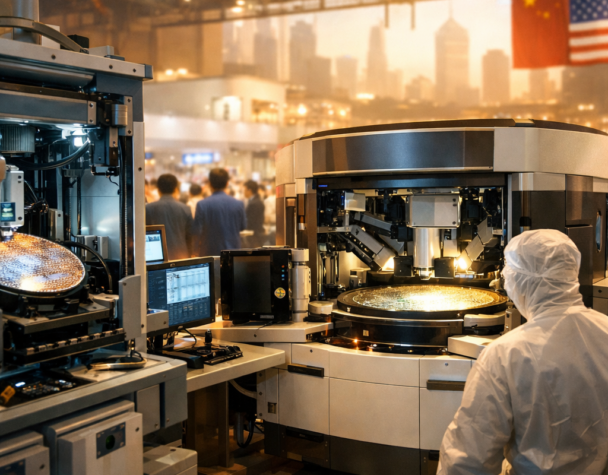
Teradyne’s decision to spotlight the Photon 100 photonic test platform at SEMICON China gives the company direct exposure to hyperscalers and Asian IDM customers that are rapidly validating photonics and AI accelerators. Showing the Photon 100 at a major China event serves two purposes: it highlights a potential new revenue stream tied to photonics validation, and it provides an early read on order interest from the region that contributes materially to Teradyne’s equipment backlog.
Headwinds: Regulatory Spillover and Sector Volatility
Regulatory headlines and a transient sell-off
On March 20, TER experienced a near-term pullback—about a 3.8% decline—amid a broader AI semiconductor sector sell-off triggered by export-related charges against a sector peer. While Teradyne was not implicated, the incident underscored the stock’s sensitivity to export controls and geopolitical scrutiny given a sizeable revenue footprint tied to China and APAC customers. For investors, this highlights that execution and compliance risk are as important as product innovation.
Why this matters for TER holders
- Order visibility: Demonstrations and customer interactions at SEMICON China can translate quickly into bookings or letters of intent, improving short-term revenue visibility.
- Geopolitical exposure: Export policy changes or enforcement actions in the AI supply chain can generate outsized volatility even when a company is not directly involved.
- Product leadership: The Photon 100 positions Teradyne to capture testing demand from photonics and AI chip programs—areas with higher ASPs and longer qualification cycles.
Investor takeaways
Teradyne’s recent rally reflects renewed confidence in its AI equipment roadmap and tangible customer engagement in Asia. The Cantor conference helped reset expectations by spotlighting strategic priorities, while SEMICON China gives real-world validation opportunities for Photon 100. That combination can convert narrative into orders—if customer trials proceed as expected.
At the same time, the sector-wide pullback tied to regulatory enforcement serves as a reminder that TER’s share price will react to policy and enforcement developments affecting the semiconductor supply chain. For investors, that implies a two-track monitoring approach: watch product commercialization and booking momentum, and track export/control headlines from Washington and relevant enforcement actions in Asia.
Conclusion
Recent events leave Teradyne at a crossroads where product innovation and regional execution will determine near-term results. Positive investor response to the Cantor presentation and Photon 100 visibility at SEMICON China are concrete catalysts; regulatory spillovers remain the primary risk that can produce rapid sentiment shifts. For active investors, the coming weeks of trade shows and booking disclosures will be decisive in assessing whether the uptick in interest translates into durable revenue growth for TER.