
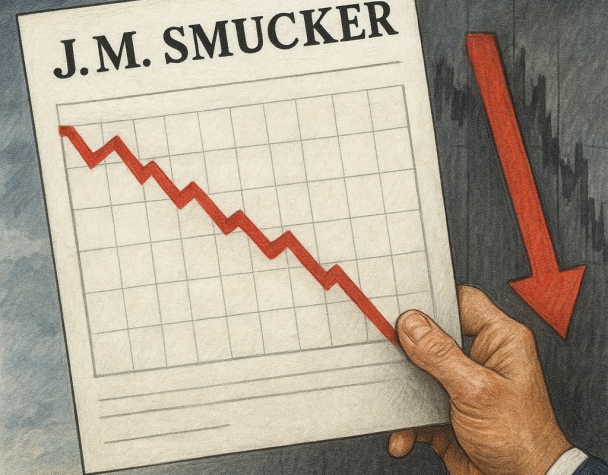
J.M. Smucker Shares Slip After Post‑Earnings Pullback Despite Strong Q1 Results
Sat, September 12, 2026J.M. Smucker’s (NYSE: SJM) shares declined approximately 1.8%, closing at $121.07 on September 10, 2026, following a rally earlier in the quarter based on its first-quarter earnings for fiscal 2027. The pullback came after the stock had surged about 12%, according to MarketBeat, on the strength of an earnings beat and a noteworthy drop in debt leverage. This movement reflects a natural consolidation after a sharp rally.
The company reported adjusted earnings per share of $3.24 for Q1 FY2027, beating the consensus estimate of $2.22 by $1.02, representing a 45% beat. However, this outperformance was partly bolstered by a one‑time tariff refund benefit, masking a smaller underlying performance beat. At the same time, J.M. Smucker reduced its debt leverage significantly—to 2.9x from 3.8x a year ago—enhancing its free cash flow profile. The company also raised its quarterly dividend, marking its 27th consecutive year of dividend increases.
The earnings beat and debt reduction drove the stock’s rally, while the subsequent 1.8% pullback to $121.07 on September 10 reflects typical profit-taking after such sharp gains. The connection between the earnings beat and the earlier stock movement is directly supported by corporate results and market coverage. The precise closing price on that date underscores the pullback’s magnitude but does not, by itself, indicate a long-term trend change.
This sequence—strong earnings, balance sheet improvement, dividend continuity, and then a modest share price retreat—illustrates a common post-earnings dynamic in equally solid companies. Investors may now await further confirmation in the form of sustained operational results or updates at the next earnings or investor-communication event.
Looking ahead, J.M. Smucker’s performance will likely hinge on whether it can deliver continued organic growth without reliance on one-time benefits, sustain debt reduction momentum, and maintain shareholder returns. Upcoming milestones, such as participation in investor conferences or Q2 commentary, could influence sentiment if they offer clarity on underlying fundamentals.