
Starbucks Quiet as Hotels Rally on RevPAR Gains
Mon, May 11, 2026Introduction
This past week saw limited direct news for Starbucks (SBUX) but notable strength across the hotel and lodging sector. Several large lodging REITs and chains reported better-than-expected first-quarter results, lifted RevPAR, and raised guidance—developments that can influence discretionary-spend names tied to travel and tourism. This article summarizes the material events from the hospitality space and explains the practical implications for Starbucks investors.
Starbucks: Quiet Week, Small Insider Activity
Insider sale and stock action
There were no new operational announcements, guidance changes, or material strategic moves from Starbucks in the past week. The only notable company-specific action was an insider sale by Brady Brewer, Starbucks’ CEO of International, who sold 2,229 shares on May 5 for roughly $233,600. The trade is modest in size and not an obvious red flag by itself.
Share-price context
SBUX traded near a 52-week high during the week—hitting about $107.52 intraday and closing in the low-$104 range—reflecting broader investor optimism in consumer discretionary and leisure-linked names. In the absence of fresh corporate catalysts, the stock’s direction will likely track macro consumer trends and foot-traffic dynamics.
Hotel Earnings and Demand: Real-World Tailwinds
Host Hotels & Resorts: standout quarter
Host Hotels & Resorts delivered a particularly strong Q1. Comparable RevPAR rose roughly 4.4%, net income nearly doubled to about $501 million year-over-year, and adjusted FFO per share came in near $0.67. Management raised RevPAR guidance and announced a sizeable special dividend (about $0.72/share) funded by asset-sale gains. Event-driven tourism—cited specifically as a driver—helped performance in major markets such as Florida and San Francisco.
Across the sector: Marriott, RLJ, Apple Hospitality, Summit
Marriott reported global RevPAR growth of about 4.2% and nudged up its full-year outlook. RLJ Lodging Trust posted RevPAR growth near 4.8% and beat earnings expectations. Apple Hospitality showed a 2.2% RevPAR gain for the quarter with March accelerating to roughly 5.8%. Summit Hotel Properties eked out positive pro forma RevPAR and tightened guidance upward. Collectively, these operators emphasized stronger pricing and event-related demand—effects concentrated in travel-heavy and event-hosting destinations.
Data-driven perspective
Broader estimates point to a healthy backdrop for the Hotels, Restaurants & Leisure category: consensus models are forecasting double-digit earnings growth (~10.9% for 2026) and mid-single-digit revenue gains (~5.8%). Industry forecasters like PwC flag a moderate RevPAR uptick (~0.9% for the year) and note a bifurcated recovery—strong leisure in seasonal markets versus a slower corporate travel rebound.
Why Hotel Strength Matters to Starbucks
Demand linkage and foot-traffic mechanics
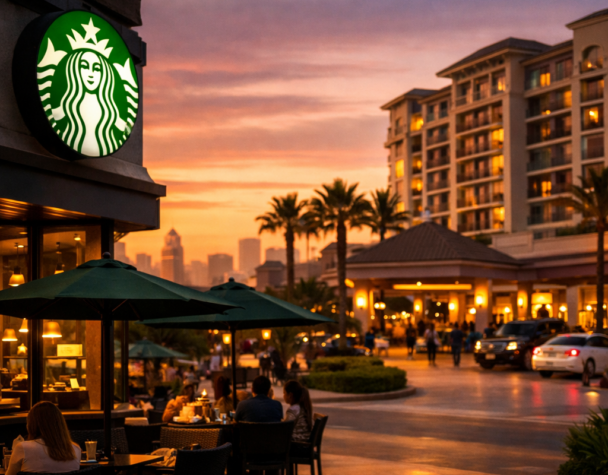
Think of hotels and cafés as neighboring boats in the same harbor: when tourism and event travel create waves—higher occupancy, longer stays, stronger pricing—they lift nearby retail and foodservice by increasing pedestrian traffic and incidental visits. Starbucks locations in airports, resorts, downtown cores, and near convention centers are particularly sensitive to travel flows. Strong RevPAR driven by events like international tournaments or concentrated tourism can translate into incremental daily ticket growth for those stores.
Visible, but indirect impact
Important caveat: hotel earnings don’t change Starbucks’ underlying business model overnight. The effect is indirect—positive leisure trends support consumer spending patterns that may help SBUX’s same-store sales in travel-exposed territories. Conversely, slower business travel or a pullback in inbound tourism would weigh on those same locations while leaving broader company initiatives intact.
Conclusion
The past week produced clear, tangible strength across the hotel sector—strong Q1 RevPAR prints, raised guidance, and event-driven demand that supported outsized results at select REITs. Starbucks had no major corporate headlines aside from a modest insider sale and continued trading near its 52-week range. For SBUX investors, the hospitality rally is a constructive tailwind: improved leisure and event tourism can lift foot traffic and sales at travel-exposed Starbucks stores, even though the company itself remains operationally unchanged this week.
Actionable takeaway
Monitor travel- and event-driven RevPAR reports and regional tourism indicators as leading signals for Starbucks’ location-level performance. Strong, sustained leisure demand in key city and resort markets tends to correlate with incremental revenue for travel-facing retail brands like Starbucks.