
Ross's 110-Store Push, $2.55B Buyback Boosts ROST
Mon, April 06, 2026Ross’s 110-Store Push, $2.55B Buyback Boosts ROST
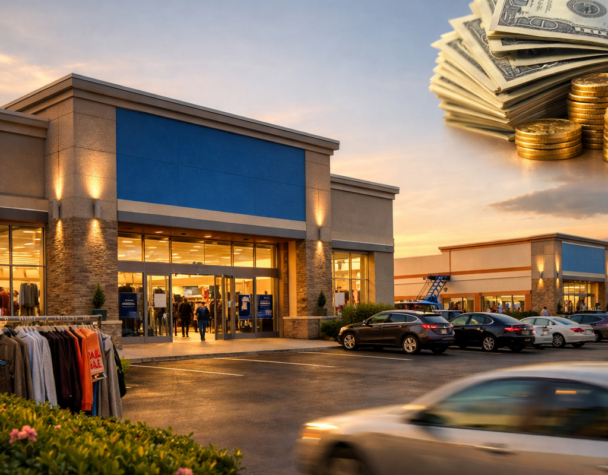
Ross Stores has signaled renewed conviction in its off-price model by stepping up physical expansion and deploying meaningful capital back to shareholders. Recent company announcements highlight a plan for roughly 110 new store openings in 2026, combined with upbeat same-store sales guidance and a $2.55 billion buyback program. These concrete actions distinguish Ross (ROST) from peers and provide tangible drivers that can affect short- and medium-term investor sentiment.
Store Expansion and Footprint Strategy
Ambitious openings with selective closures
The 2026 rollout comprises approximately 85 Ross Dress for Less locations and 25 dd’s Discounts stores. Management expects to close or relocate a modest number of underperforming sites—roughly 10–15—while adding new units in higher-potential trade areas. This results in net unit growth of about 5%, reinforcing merchandising scale without overextending the portfolio.
Why store growth still matters
In the off-price sector, incremental stores serve as durable revenue engines: they increase purchasing flow-through from national merchandising buys, improve inventory turns, and broaden customer reach in underserved suburban and secondary markets. For Ross, adding stores remains capital-efficient relative to full-price competitors, and each new location helps capture displaced apparel spending as department stores contract.
Financial Moves: Guidance and Buybacks
Same-store sales outlook
Management issued same-store sales guidance of approximately 3%–4% for the year, a projection that sits above recent Wall Street consensus. This suggests continued customer demand for value pricing and stable traffic trends across Ross’s formats. For investors, the guidance reduces uncertainty about revenue momentum and supports near-term earnings expectations.
Share repurchase program and capital allocation
The announced $2.55 billion buyback spanning fiscal 2026–2027 is a material and deliberate capital-return move. Large repurchases typically have two effects: an immediate reduction in share count, which mechanically supports per-share metrics, and a signal that management views the stock as attractively valued. When combined with steady store expansion, the buyback underscores a balanced approach between growth and shareholder returns.
Implications for Investors
Concrete operational and financial measures from Ross provide clear catalysts:
- Revenue visibility: New stores and optimistic same-store sales guidance strengthen near-term top-line projections.
- EPS support: The buyback should enhance per-share earnings, assuming execution and margin stability.
- Competitive positioning: Scale and off-price merchandising continue to differentiate Ross versus fading department stores and higher-cost rivals.
Execution risks and watch points
Key risks remain execution-related: lease economics for new stores, inventory consistency to avoid markdown pressure, and regional demand variability. Investors should monitor quarterly trends in ticket and transactions, gross margin resilience, and the pace at which buybacks are executed versus share price moves.
Conclusion
Ross’s dual strategy—accelerating store openings while returning substantial capital through a $2.55 billion buyback—creates measurable drivers that can support ROST’s valuation over coming quarters. The firm’s above-consensus same-store sales guidance further reduces execution uncertainty, making Ross a noteworthy player within off-price apparel retail. Ongoing scrutiny of execution metrics will determine whether these initiatives translate into sustainable outperformance.