
Ross Stores Surges: Store Growth, Q4 Beat Buybacks
Mon, April 20, 2026Introduction
Ross Stores (ROST) entered the week on the front foot after releasing fiscal results and operational updates that reinforced its position in the off-price apparel channel. Recent disclosures are notable for their combination of tangible expansion activity, strong same-store sales, and a sizeable shareholder-return package. This article summarizes the key events from the past week, explains why they matter for ROST, and outlines near-term implications for investors and competitors.
Quarterly Performance: Clear Beat and Strong Fundamentals
Ross closed FY2025 with a robust fourth quarter: sales rose by double digits year-over-year, driven by a roughly 9% increase in comparable-store sales. Quarterly revenue approached $6.6 billion while net income and diluted EPS showed meaningful improvement versus the prior year. For the full fiscal year, Ross reported top-line growth and EPS of approximately $6.61, signaling both demand resilience and operational leverage for the off-price model.
What the numbers show
The recent quarter highlighted two measurable strengths: consumer traffic to off-price doors and margin stability. A larger merchandise assortment, tight inventory control, and effective clearance cadence helped lift comps and preserve gross margin. Management’s commentary and the published figures together removed uncertainty around whether value-focused apparel retailing was losing steam — ROSS’s data indicate it is not.
Store Expansion: 17 New Openings and a 110-Unit Target
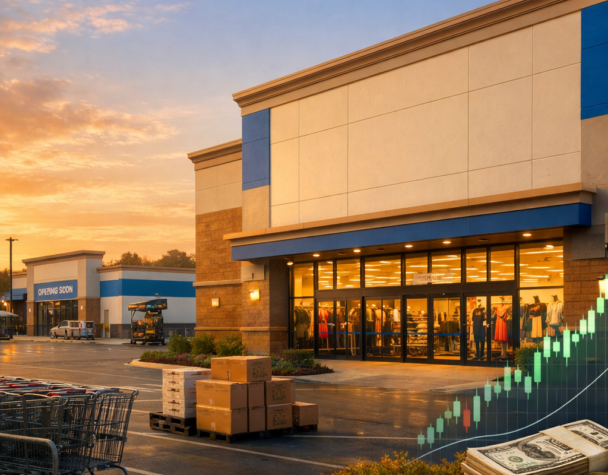
Ross confirmed it opened 17 stores in the early phase of its 2026 rollout, including both Ross Dress for Less and dd’s DISCOUNTS locations across several states. The company reiterated a goal of roughly 110 net new store openings this year (about 85 Ross and 25 dd’s), representing around 5% unit growth. These openings are concrete, site-level actions that expand reachable customers and increase inventory turnover capacity.
Why brick-and-mortar still matters for Ross
Unlike some segments that are retrenching, Ross’s strategy leans on the physical store as the discovery engine for off-price merchandising. Each new store acts like a rotating showroom: fresh buys, localized assortments, and repeat treasure-hunt visits by shoppers. The steady store cadence supports same-store sales through improved regional merchandise variety and higher traffic density around new clusters.
Capital Returns: Aggressive Buybacks and Dividend Lift
Beyond operational metrics, Ross strengthened its capital-return posture. The board authorized up to $2.55 billion in share repurchases, on top of prior buybacks, and the company increased its quarterly dividend to $0.445 per share. Those actions are concrete signals of balance-sheet confidence and management’s belief that returning capital shares value creation for shareholders.
Investor takeaways on allocation
Large repurchase programs tend to boost reported EPS and can tighten the float if executed. For investors, the buyback authorization paired with a higher dividend provides both income and potential per-share upside. It also indicates that management views current and near-term cash flow as sufficient to support growth investments while returning cash to owners.
Guidance and Near-Term Outlook
Management issued forward guidance that included meaningful same-store sales expectations: an elevated quarterly comp projection and a positive full-year comp range. Fiscal EPS guidance was raised into a range that reflects confidence in both merchandising execution and cost control.
Concrete risks and limits
The outlook is constructive but not without operational contingencies: merchandise sourcing, freight costs, and local market saturation in high-growth regions could affect realized results. Importantly, the company’s guidance and store counts are explicit targets, not open-ended promises — investors should monitor execution against those milestones.
Broader Apparel Signals This Week
While Ross expands, some apparel and department-store peers have moved in the opposite direction. Recent credit and structural actions at certain luxury chains and the closure of smaller specialty brands underscore divergent outcomes across retail segments. Those contrasts highlight Ross’s relative strength in the value-driven off-price niche.
Conclusion
Last week’s developments for Ross Stores are concrete and action-oriented: a clear quarterly beat, a sizable store-opening program, and a major capital-return authorization combined to reinforce management’s confidence in the off-price model. For shareholders and prospective investors, the narrative is one of execution — measured expansion paired with disciplined returns. The coming quarters will show whether Ross can sustain comp momentum as it scales its store base and deploys the authorized buybacks.