
Regency Centers Rally: Crystal Brook Boosts REGs!
Tue, February 24, 2026Introduction
Regency Centers (NYSE: REG) has drawn renewed investor attention this week after hitting a fresh 52-week high and announcing a major redevelopment in New York. The company’s grocery-anchored strategy, strong leasing results and active development pipeline help explain the stock’s outperformance—even as trading volume remained unusually light. This article breaks down the key developments, the underlying data, and what they mean for investors.
Recent Price Action and Trading Context
On February 23, 2026, REG closed at $77.78—up about 1.2% on the day—and traded within reach of the week’s high near $78.18. The rally stands out because it occurred while the broader S&P 500 fell and trading volume for REG was tiny (roughly 8,449 shares versus a typical average near 1.3 million). That divergence suggests the move is being driven by focused buying or news catalysts rather than broad market flows.
What the numbers tell us
- 52-week high: ~ $78.18
- Recent close (Feb 23, 2026): $77.78
- Trading volume: very light relative to historical average
Crystal Brook Corner: Strategic Redevelopment
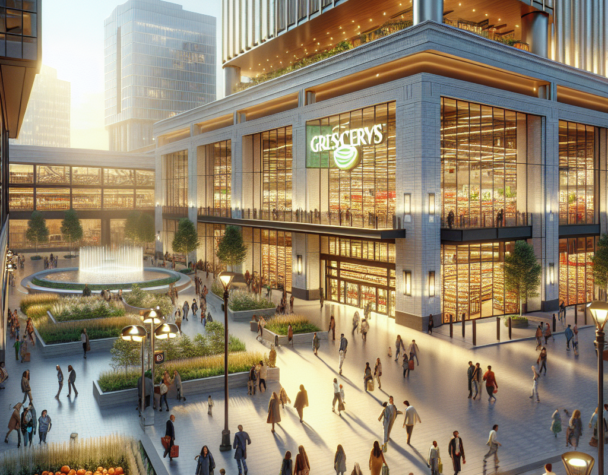
Regency’s new project—the Crystal Brook Corner redevelopment of a former Mount Sinai shopping center in New York—is anchored by a Whole Foods and aims to reposition the site as a daily-needs destination. This fits squarely with Regency’s long-standing strategy: prioritize grocery-anchored, community-serving centers that generate steady foot traffic and resilient cash flows.
Why grocery-anchored projects matter
Think of grocery anchors as the retail equivalent of a utility: people visit regularly, which keeps adjacent shops viable. For a shopping-center landlord, this steadier traffic can translate into higher occupancy, stronger rent renewal metrics, and lower tenant turnover—key drivers of net operating income (NOI) stability.
Operational Fundamentals: Leasing, NOI, and FFO
Regency’s recent quarter (Q4 2025) provided important context for the stock’s momentum. Highlights included an earnings beat—EPS of $1.12 versus estimates near $0.57—alongside robust leasing metrics and positive same-property performance.
Key performance indicators
- Same-property NOI growth (full year): +5.3%
- Record rent spreads: ~12% cash spreads, 13% renewal spreads, 25% GAAP spreads
- Occupancy: shop occupancy around 94.2%
- FFO guidance for 2026: roughly $4.83–$4.87
- Development pipeline: approximately $325 million scheduled for 2026
These metrics indicate healthy leasing demand and pricing power—particularly important for a retail REIT focused on necessity-driven tenants.
Implications for Investors
Regency’s near-term share gains are supported by concrete operational wins: a high-visibility redevelopment that reinforces its grocery-anchor thesis, strong rent spreads that demonstrate pricing leverage, and a development pipeline that can add recurring income over time. However, investors should weigh these strengths against valuation considerations; the stock is trading near its 52-week peak, and light volume around recent moves can amplify short-term volatility.
Practical takeaways
- Long-term investors: Regency’s strategy and leasing momentum support a hold thesis for income-plus-growth profiles.
- Value-sensitive investors: watch valuation metrics and potential pullbacks—near-term upside may be limited while the stock sits close to a 52-week high.
- Event-driven traders: monitor execution on Crystal Brook Corner and subsequent leasing/occupancy updates to validate projected NOI contributions.
Conclusion
Regency Centers’ recent stock strength is anchored in tangible developments—most notably the Crystal Brook Corner redevelopment and solid Q4 leasing performance. Those fundamentals justify investor interest, but light trading volume and valuation near-year highs introduce risk for short-term traders. Over the medium-to-long term, Regency’s focus on grocery-anchored, community-centric centers and a disciplined development program remain the most compelling reasons to consider REG for income-oriented real estate exposure.