
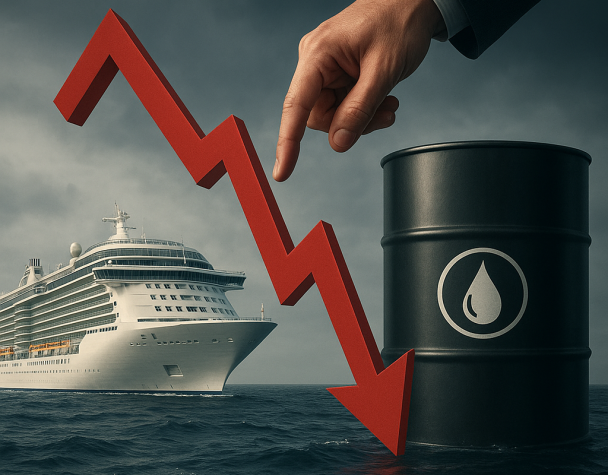
Royal Caribbean Stock Slips Nearly 5% Amid Renewed Oil Price Pressure and Booking Disruptions
Mon, August 24, 2026Shares of Royal Caribbean Group (NYSE: RCL) tumbled 4.87% to close at $285.92 on August 20, 2026, extending pressure on the stock amid renewed oil cost concerns and persistent itinerary disruptions. Analysts point to a rebound in oil prices and continued geopolitical headwinds as key near-term challenges for the cruise operator.
The decline occurred despite RCL’s strong second-quarter performance, which featured an adjusted EPS of $4.21—well above consensus forecasts—and a raised full-year earnings outlook. Nevertheless, management’s caution over a “modest booking impact for select itineraries” tied to geopolitical instability, along with climbing oil prices, appeared to overshadow the upbeat operational results. The company has specifically suspended visits to Labadee for the remainder of 2026 amid ongoing disruptions.
Stock Movement and Context
RCL’s 4.87% slide to $285.92 on August 20 put the stock roughly 22% below its 52-week high of $366.50 reached last August. Trading volume also dropped to around 1.2 million shares—well below the 90-day average of approximately 2.6 million—reflecting subdued investor demand amid the volatility.
Underlying Pressure Points
The share price decline correlated with a rebound in oil prices, which raises fuel costs—a major operating expense for cruise operators. At the same time, Royal Caribbean warned that some itineraries remain impacted by geopolitical tensions, a reference echoed by multiple analysts citing strained bookings — notably the suspension of Labadee port calls through year-end.
Even after delivering strong Q2 profitability and raising guidance, these operational risks have tempered investor enthusiasm, driving the downward move in RCL’s equity.
Why It Matters
For investors focused on Royal Caribbean, the recent pullback underscores the sensitivity of the cruise business to external shocks—particularly fuel prices and geopolitical disruption. While demand remains robust overall, these cost and booking pressures could constrain margins and weigh on upcoming periods.
Investors may monitor commodity markets and geopolitical developments closely in the near term, as these factors could meaningfully influence both itinerary demand and cost structure. Against a backdrop of solid underlying demand and a raised earnings forecast, RCL remains fundamentally well-positioned—but not immune to external volatility.
Verified Data and Disclosures: The closing price of $285.92 and 4.87% decline on August 20. Investment volume compared to 90-day average of 2.6 million shares. The booking caution and itinerary impact, including Labadee suspension. All data based on news reports and filings from Weiss Ratings, Benzinga, Quiver Quantitative, and Royal Caribbean’s earnings release and investor communication.