
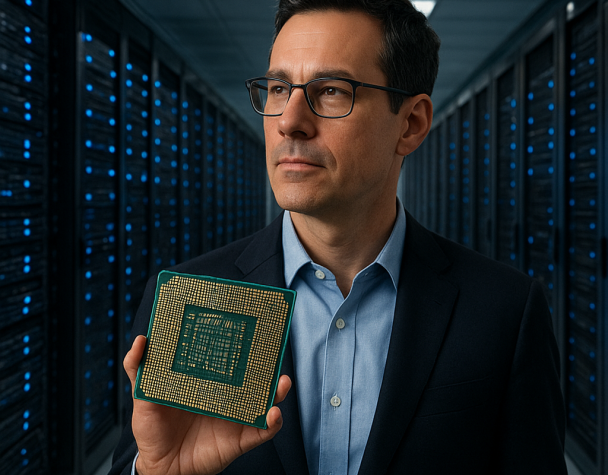
Qualcomm Eyes Data Center Market as Semiconductor Demand Soars
Sun, July 19, 2026Qualcomm Eyes Data Center Market as Semiconductor Demand Soars
Qualcomm Incorporated (NASDAQ: QCOM) has been actively expanding its presence in the semiconductor and telecommunications sectors, implementing strategic initiatives that have significantly influenced its stock performance.
Data Center Expansion and AI Integration
In May 2026, Qualcomm announced plans to enter the data center processor market, aiming to diversify beyond its traditional smartphone chipset business. CEO Cristiano Amon revealed that the company is scheduled to ship data center processors to a major hyperscaler in 2026. This move is part of Qualcomm’s broader strategy to capitalize on the growing demand for artificial intelligence (AI) applications and data processing capabilities. The announcement led to a significant surge in QCOM shares, which reached a record intraday peak of $247.90 on May 11, 2026. This marked the first record closing level for the chipmaker since June 18, 2024.
Market Volatility and Investor Sentiment
Despite the positive momentum, Qualcomm’s stock has experienced fluctuations. On June 24, 2026, QCOM shares fell 3.9%, trading as low as $191.02. This decline was attributed to a broader pullback in semiconductor stocks and profit-taking in AI-related chip names. Investors exhibited caution over the crowded AI market and potential execution risks associated with Qualcomm’s expansion into new domains. Nevertheless, the company has maintained a strong financial position, with a market capitalization of approximately $184 billion and a price-to-earnings (P/E) ratio of 18.43 as of July 18, 2026.
Industry Developments and Competitive Landscape
The semiconductor industry has witnessed significant developments that impact Qualcomm’s strategic positioning. ASML, the exclusive provider of advanced semiconductor manufacturing machines for Western chipmakers, raised its financial forecast due to strong demand across both DRAM and advanced logic segments. This surge is driven by the AI boom, leading to widespread investments in chip production and facility expansion. ASML now anticipates over 25% growth in advanced logic-related sales and a 45% increase in EUV (Extreme Ultraviolet) system sales, expecting to ship around 65 Low-NA EUV units in 2026.
Additionally, the memory chip market is experiencing an extraordinary boom driven by surging demand from AI applications, leading to severe shortages and prolonged price increases. Major manufacturers like Micron, Samsung, and SK Hynix are seeing record profits and stock growth. Global memory chip revenue is projected to reach $803 billion in 2026, nearly doubling the value of all logic chips and matching the entire semiconductor market in 2025.
Conclusion
Qualcomm’s strategic initiatives, particularly its entry into the data center processor market and focus on AI integration, position the company to capitalize on the growing demand for advanced semiconductor solutions. While the stock has experienced volatility, these moves reflect Qualcomm’s commitment to diversification and innovation. As the semiconductor industry continues to evolve, Qualcomm’s ability to navigate this dynamic landscape will be crucial in sustaining its growth and market relevance.