
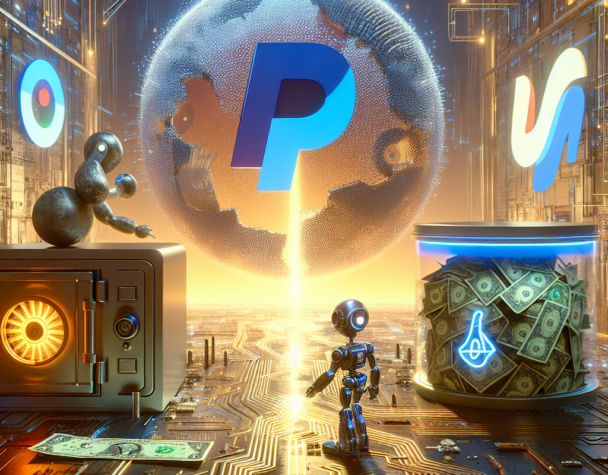
PayPal's Google Tie-Up & $15B Buyback Boost PYPL24
Wed, January 07, 2026PayPal’s recent moves: concrete catalysts for PYPL
In the past week PayPal announced two high-impact actions that directly affect PYPL: a multi-year integration with Google platforms and an open $15 billion share buyback authorization. Combined with expanded Venmo interoperability and AI investments, these developments represent tangible strategic and financial levers intended to increase merchant reach, improve transaction economics, and enhance shareholder returns.
What the Google integration means
The deal embeds PayPal into Google Cloud, Play, and Ads workflows and commits both companies to build AI-driven shopping and checkout experiences. Practically, this gives PayPal expanded distribution inside Android apps, Google Play billing flows, and ad-driven purchase paths. For a payments company, distribution is growth: being available at more checkout touchpoints typically lifts conversion and share of wallet.
Direct commercial benefits
- Increased merchant accessibility: PayPal can appear as a native payment option across millions of Android users and app developers using Google platforms.
- AI-assisted checkout: Personalized shopping assistants and smarter ad-to-cart flows should raise conversion rates — a measurable input for transaction volume.
- Cross-sell opportunities: Integration into Google’s ecosystem creates pathways for PayPal financial products and Venmo adoption among new users.
The $15 billion buyback: financial engineering with real effects
PayPal’s board authorized a $15 billion open repurchase program with no expiration date. This follows substantial repurchases in recent periods; in 2024 the company repurchased roughly 92 million shares for about $6 billion. Large buybacks directly reduce share count and, all else equal, boost earnings per share, dividend cover, and other per-share metrics that investors use to value the company.
Why buybacks matter now
With PayPal facing stiff competition in payments, management is leaning on capital allocation to drive shareholder returns while executing on growth initiatives. The buyback acts like a financial accelerator: if transaction growth is steady, fewer shares amplify per-share profits. For investors focused on EPS and return metrics, this is a clear near-term positive.
Venmo and AI: operational drivers, not slogans
Beyond headline deals, PayPal is advancing two operational pillars that will influence margins and top-line traction. First, Venmo continues to scale as a commerce and payments channel; management has signaled multi-billion dollar revenue potential as monetization improves. Second, PayPal is deploying AI across consumer-facing commerce (agentic shopping assistants) and internally for fraud prevention and routing optimization. These applications are expected to lift transaction margins by meaningful basis points over coming quarters.
Concrete examples of impact
- Agentic commerce integrations with AI partners allow users to complete purchases inside chat or assistant experiences while preserving PayPal as the payment rail — increasing transactions without traditional storefront friction.
- AI-driven routing can reduce interchange costs and fraud losses, directly expanding net transaction margin even if processing volume grows modestly.
Investor implications and near-term outlook
Taken together — Google distribution, aggressive buybacks, Venmo monetization, and AI-driven margins — PayPal has both structural and tactical catalysts. The Google integration is a distribution and product channel expansion, the buyback is an earnings-per-share lever, and AI/Venmo are operational margin and monetization plays. For investors, these are measurable, not speculative, changes that can move valuation if execution follows.
On market reaction, the initial Google announcement triggered a positive stock response as investors priced the added distribution opportunity. The buyback authorization further signals management’s confidence in cash generation and long-term business prospects.
Conclusion
PayPal’s recent announcements are notable because they combine external distribution partnerships with internal efficiency investments and shareholder-friendly capital allocation. The Google integration opens significant new touchpoints for payments, the $15 billion buyback immediately alters the capital structure in favor of per-share metrics, and Venmo plus AI provide ongoing paths to margin and revenue improvement. These are specific, actionable developments that materially affect PYPL’s growth and earnings profile.
Investors should track implementation milestones: merchant adoption inside Google properties, the cadence of buyback execution, Venmo monetization metrics, and early results from AI-driven fraud and routing programs. Each gives a measurable read on whether these catalysts translate into durable stock performance.