
PTC Windchill AI, BMW Win; Stock Outlook Rises Now
Tue, May 05, 2026PTC’s near-term catalyst: Windchill AI and enterprise wins
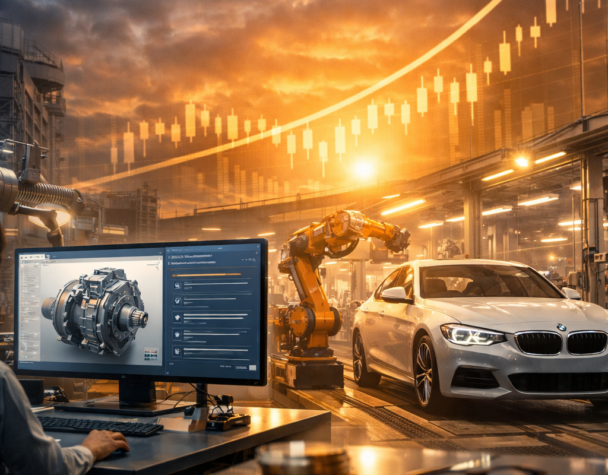
PTC moved decisively this week to sharpen the value proposition of its core engineering software. The company introduced the Windchill AI Assistant — a generative-AI layer embedded into its Product Lifecycle Management (PLM) platform — and announced a major enterprise adoption of its Codebeamer Application Lifecycle Management (ALM) solution by BMW. Together, these announcements reinforce PTC’s pivot toward AI-enhanced engineering workflows and higher-value enterprise deployments.
Windchill AI Assistant: an engineer’s co-pilot
The Windchill AI Assistant adds natural-language search, summarization and context-aware responses inside PLM. For engineering teams drowning in specifications, bills of materials and change histories, this feature acts like a “co-pilot” that reduces time spent locating authoritative information and speeds decision cycles. Critically, PTC positions the assistant to honor data lineage and access controls — a must for regulated industries that cannot tolerate uncontrolled model hallucinations.
Codebeamer adoption at BMW: reference-level validation
Securing the BMW Group as a standardized ALM user is more than a customer win; it’s a validation of Codebeamer’s ability to handle multi-domain traceability across mechanical, electrical and software systems. For PTC, that kind of reference can accelerate consideration among other OEMs and suppliers where complex product development processes demand tight requirements management and auditability.
Strategic refocus: Velotic spin-off and portfolio clarity
Earlier this year PTC completed the divestiture of certain IoT and connectivity assets — now organized under the private company Velotic — allowing PTC to concentrate resources on PLM, CAD and ALM. The transaction simplifies PTC’s product set and gives management clearer runway to invest in AI, subscription growth and margin expansion. For investors, a leaner product portfolio often yields more predictable cash flow and easier valuation comparisons with pure-play engineering-software peers.
Why the spin-off matters to investors
With Velotic handling the industrial IoT stack, PTC can reallocate capital to markets where it holds stronger differentiation. That could translate to more consistent R&D roadmaps and targeted go-to-market investments for Windchill and Codebeamer — the two offerings that now anchor PTC’s growth narrative.
Stock context: pricing and investor implications
As of early May 2026, PTC shares have been trading around $136.50, hovering near recent lows after modest declines over the past month and year. The new AI capability and BMW reference customer provide concrete, operational catalysts rather than speculative promises — factors that can influence revenue visibility through improved retention, upsell opportunities and new enterprise deals.
What to watch next
- Adoption metrics for Windchill AI: active usage, renewal uplift and any measurable time-savings claims from customers.
- Proof points from BMW’s deployment: rollout timeline and whether the Codebeamer standardization expands to other divisions or suppliers.
- Capital allocation moves: how cash freed by the Velotic transaction is deployed (R&D, buybacks, or M&A).
Conclusion
PTC’s recent moves are practical and execution-oriented: embedding generative AI into PLM and winning a marquee ALM deployment are tangible steps that strengthen product differentiation and enterprise credibility. Coupled with a clearer portfolio after the Velotic spin-off, these developments give investors concrete milestones to monitor — adoption metrics, renewal trends and capital allocation decisions will determine whether the company can convert technology announcements into sustainable revenue and margin improvements.