
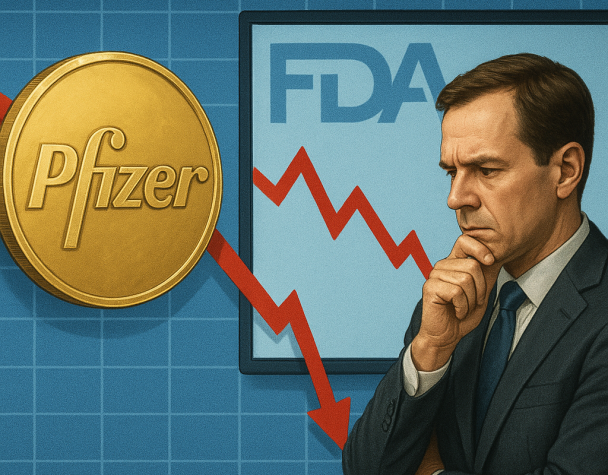
Pfizer's Stock Reacts to FDA Approvals and Leadership Changes
Sun, July 12, 2026Pfizer’s Stock Reacts to FDA Approvals and Leadership Changes
Pfizer Inc. (NYSE: PFE) has recently experienced notable stock fluctuations, influenced by significant developments including FDA approvals and executive transitions.
FDA Approvals Impact Stock Performance
On June 11, 2026, Pfizer’s stock rose by 2.2%, reaching a high of $26.48. This uptick coincided with the FDA’s expansion of the U.S. label for HYMPAVZI, broadening Pfizer’s hemophilia market opportunity and bolstering its rare-disease portfolio. Additionally, the initiation of a Phase 1 study for PF-07799544 added to the company’s research and development pipeline.
Conversely, on June 24, 2026, Pfizer’s shares declined by 2.7%, dipping to $23.93. This downturn followed mixed news: while the FDA approved an IBRANCE regimen and advanced a pediatric pneumococcal vaccine into Phase 3, a lung cancer trial for sigvotatug vedotin did not meet its primary survival goal. Furthermore, Pfizer was dismissed from a U.S. states’ drug price-fixing lawsuit, adding to the market’s uncertainty.
Leadership Transition and Market Response
On June 18, 2026, Pfizer announced a CFO transition, appointing Cecile Guegan as interim CFO while searching for a permanent replacement. Despite reaffirming its 2026 guidance, the stock fell by 2.6% that day, trading as low as $24.94. This decline reflects investor caution amid leadership changes and broader market uncertainties.
Analyst Perspectives and Dividend Yield
Analysts maintain a cautious outlook on Pfizer, with a consensus “Hold” rating and an average price target of $28.82. The stock’s current price of $24.17 offers a dividend yield of approximately 7.1%, appealing to income-focused investors. However, concerns about near-term growth and patent expiration pressures persist.
Conclusion
Pfizer’s recent stock performance underscores the complex interplay between regulatory approvals, leadership changes, and market sentiment. Investors should monitor these developments closely, considering both the company’s strategic initiatives and the broader biopharmaceutical landscape.