
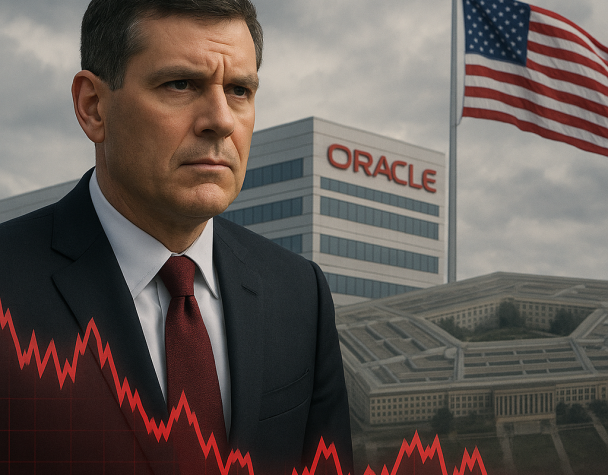
Oracle Secures $7 Billion Pentagon Contract Amid Stock Volatility
Tue, July 28, 2026Oracle Secures $7 Billion Pentagon Contract Amid Stock Volatility
Oracle Corporation has recently secured a significant 10-year, $7 billion Enterprise Software Agreement (ESA) with the U.S. Department of War (DoW). This contract consolidates all of Oracle’s previous software, services, and license agreements under one unified contract across the DoW, Coast Guard, and Intelligence Community. The goal is to streamline procurement, reduce costly redundancies, and accelerate IT modernization efforts, with expected savings of at least $441 million.
Rather than representing new funding, the contract aggregates existing Oracle agreements under a centralized procurement model. It aligns with broader federal efforts to reduce inefficient spending, prompted by former President Donald Trump’s executive order to centralize IT procurement across the government. This move follows similar agreements earlier in the year with Dell and Microsoft worth $9.7 billion. Officials emphasize the benefits of standardization, such as improved cybersecurity, interoperability, and the ability to scale critical systems rapidly—particularly for Navy and Marine Corps operations. The initiative marks a broader trend toward consolidated IT strategies across U.S. defense and intelligence agencies.
Despite this substantial contract, Oracle’s stock has experienced notable volatility. As of July 28, 2026, Oracle’s stock price stands at $115.48, reflecting a 3.69% decrease from the previous close. This decline is part of a broader trend, with the stock down nearly 15% over the past week. Analysts attribute this downturn to investor concerns over Oracle’s significant investments in AI and cloud infrastructure, which have been largely financed through debt. These investments have impacted the company’s credit rating and increased the risk of default, leading to heightened market apprehension.
In response to these challenges, Cantor Fitzgerald has reiterated an “Overweight” rating for Oracle, setting a price target of $284.00. The firm highlights Oracle’s strong cloud growth, noting that the company reported CPU/GPU infrastructure revenue of $4.8 billion, up 119% year-over-year, and IaaS revenue growth of 93% to $5.8 billion. Multicloud database-as-a-service revenue also increased by 404% year-over-year. Overall, Oracle posted revenue growth of 17% to $67.4 billion over the last twelve months.
Additionally, Oracle’s founder, Larry Ellison, is facing challenges on multiple fronts. Beyond the company’s stock performance, a proposed $110 billion merger between Paramount and Warner Bros. Discovery, involving Ellison’s son, David Ellison, has been temporarily blocked by a federal judge. The merger faces opposition from several U.S. states due to potential anti-competitive effects. This development adds to the financial pressures on the Ellison family, as Larry Ellison has provided significant personal guarantees for the deal.
In the broader enterprise software and cloud computing landscape, competitors are making strategic moves. Microsoft and Databricks have expanded their partnership to enhance data management and boost AI system efficiency. This collaboration includes tighter integration of Databricks’ AI tools into Microsoft’s product ecosystem, aiming to help enterprises better manage and contextualize data for AI applications. Such developments underscore the competitive pressures Oracle faces in maintaining its market position.
In conclusion, while Oracle’s recent $7 billion contract with the Pentagon signifies a substantial achievement, the company must navigate investor concerns over its debt-financed investments and increased competition in the cloud computing and AI sectors. The outcome of the Paramount-Warner Bros. Discovery merger and Oracle’s strategic responses to these challenges will be critical in shaping the company’s future trajectory.