
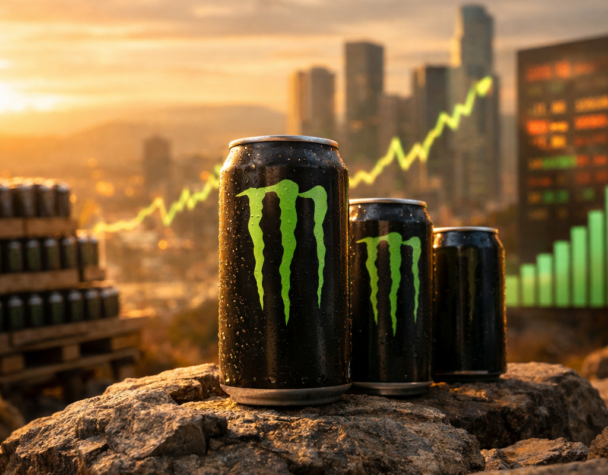
Monster Strengthens Lead as Energy Sales Rise Now!
Tue, April 14, 2026Monster Strengthens Lead as Energy Sales Rise Now!
Recent retail data point to renewed momentum in non‑alcoholic beverage sales, and Monster Beverage (MNST) stands out. NielsenIQ’s most recent snapshot (reported via market commentary) showed dollar sales for the category rising 6.1% year‑over‑year for the two weeks ending March 21, with volume up 3.1%. Within that growth, energy drinks remain the primary driver and Monster posted a robust +9.9% dollar-growth figure—well ahead of many peers. For investors focused on MNST in the S&P 500, these concrete, short‑term results matter because they help validate Monster’s share gains and pricing power in a crowded aisle.
Recent Sales Data and Category Dynamics
Category performance highlights
The two‑week NielsenIQ update showed a clear acceleration in shopper spend, with energy drinks leading the pack. While overall volume growth was moderate (+3.1%), dollar growth outpaced volume, implying favorable price/mix effects—either from price increases, premiumization, or a shift toward higher‑priced SKUs. Monster’s reported +9.9% dollar growth suggests it is capturing both unit demand and an improved mix versus rivals.
Adjacent trends: functional drinks and RTD
Beyond core energy, the broader non‑alcoholic space is evolving. Functional beverages and RTD (ready‑to‑drink) segments have expanded rapidly over recent years; industry notes cite functional drinks up materially since 2020 and RTD cocktail channels growing as well. These adjacent categories don’t dilute Monster’s current dominance in energy drinks but create opportunities for innovation or partnership should the company choose to diversify its portfolio.
Competition and Share Shifts
How peers are performing
Recent comparisons show Celsius growing (+7.2% in the same dataset) while brands like Nutrabolt’s C4 were weaker (−5.4%). Notably, some challengers such as PRIME have exhibited dramatic declines in dollar sales (reported down significantly in the short term), illustrating the volatility of newer entrants versus incumbent brands. Monster’s consistency contrasts with these swings and supports the thesis that established brands with wide distribution maintain resilience.
Distribution and partner advantages
Monster’s long‑standing distribution network and strategic partnerships (including its well‑known relationship with Coca‑Cola) function as a competitive moat. Wide retail placement, supply chain scale, and marketing muscle help Monster convert category growth into share gains more reliably than many smaller rivals.
Investor Implications for MNST
Near‑term catalysts to watch
Investors should track upcoming monthly/quarterly NielsenIQ and retailer scans, Monster’s earnings and guidance, product launches, and any shifts in pricing or promotional cadence. S&P 500 inclusion amplifies the impact of passive flows; therefore, steadier growth can generate outsized demand from index rebalances and ETF inflows.
Risks and monitoring triggers
Watch for category deceleration, margin pressure from input costs, or a sustained gain in share by disruptive newcomers. Rapid declines in peers like PRIME highlight how quickly consumer preferences can swing. Management commentary around innovation, international expansion, and channel mix will be key signals for future growth sustainability.
Conclusion
Last week’s data reinforce Monster Beverage’s leadership in the energy segment: strong dollar growth and favorable mix dynamics support MNST’s positioning within the S&P 500. For investors, the immediate takeaway is that Monster continues to convert category tailwinds into measurable sales strength, but staying alert to competitive churn, margin trends, and upcoming company disclosures will be essential to assess whether that strength is durable.