
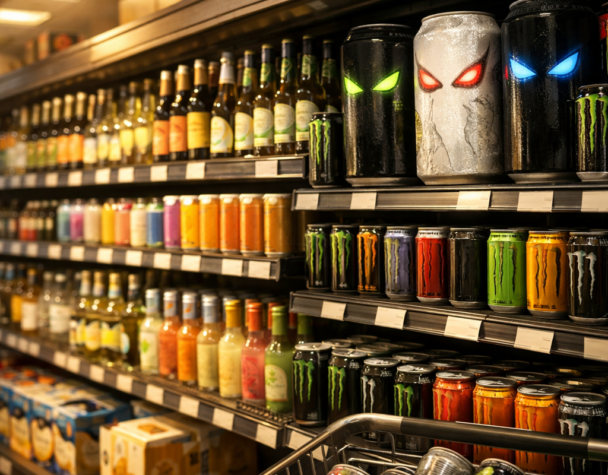
Monster (MNST) Faces Non-Alcoholic Shelf Pressure.
Tue, March 31, 2026Monster (MNST) Faces Non-Alcoholic Shelf Pressure.
Over the past week, tangible shifts in the non-alcoholic beverage arena have rippled into the energy drink sector—and directly into investor thinking about Monster Beverage (MNST). Several industry reports and analyst notes show fast growth in non-alcoholic beer and ready-to-drink (RTD) non‑alcoholic spirits, alongside renewed bullishness from equity analysts on MNST. These are not speculative headlines: they are concrete sales and distribution trends that can influence shelf allocation, promotional spend, and near-term revenues for energy‑drink leaders.
What changed this week — concrete developments
Non‑alcoholic categories are accelerating
Recent data highlight steep growth in specific non‑alcoholic segments. RTD non‑alcoholic spirits are expanding at a blistering pace (reported at roughly +40% year‑to‑date in recent channel data), while non‑alcoholic beer is logging strong double‑digit gains in both dollars and volume. One industry snapshot showed non‑alcoholic beer up about 22% in dollar sales and nearly 24% in volume over a recent 52‑week window. Another sector analysis cited year‑over‑year dollar gains in non‑alcoholic beer north of 25% and an even larger jump for non‑alcoholic spirits.
These are not marginal niche moves: mainstream brewers and national brands are launching new non‑alcoholic SKUs and carving out shelf listings, and retailers are responding to clear consumer demand for alcohol‑free options.
Analysts and equity flows favor MNST despite category shifts
At the same time, equity analysts have shown renewed confidence in Monster. The stock reached new highs in the past year, delivering strong returns (approaching a roughly 48% one‑year gain in recent performance snapshots) and trading at a premium forward valuation relative to broader consumer names. Several sell‑side firms have nudged up price targets, citing Monster’s international expansion, larger zero‑sugar assortment, and resilient margins.
Why these events matter to Monster (MNST)
Shelf space is real estate—competition squeezes rent
Think of retail shelf space and on‑premise cooler capacity as finite real estate. When high‑growth non‑alcoholic beers and RTD spirits demand listing and promotional support, they compete for planogram positions, end‑cap rotations, and promotional budgets that energy drinks traditionally rely upon. Even if Monster’s core energy portfolio remains popular, increased assortment breadth in the beverage aisle can reduce facings, shrink promotional windows, and raise acquisition costs per new household.
Distribution and promotional dynamics
Monster benefits from a large, efficient distribution network and strong distributor relationships, which buffer short‑term retail crowding. But distributors and retailers will prioritize SKUs with the fastest velocity per linear foot. Rapidly growing NA beer and RTD SKUs often come with manufacturer support—co‑op funds, sampling programs, and trade discounts—that can pull attention away from energy drink promotions. Over time, that reallocation can put pressure on Monster’s topline growth in certain channels, particularly convenience stores and grocery where display space is contested.
Valuation and investor expectations
Analyst upgrades and a stretched forward P/E signal that investors expect continued premium execution from Monster. That optimism provides a cushion: solid fundamentals and favorable guidance can outweigh incremental competitive noise. However, elevated multiples also reduce tolerance for growth misses. If non‑alcoholic alternatives materially dent Monster’s velocity in key outlets, the stock could react more sharply than it would at lower valuation levels.
How Monster can respond—strategic levers
Innovation and SKU rationalization
Monster has leaned into zero‑sugar and flavor innovation in recent quarters. A focused SKU strategy—replacing underperforming flavors with higher‑velocity innovations and leveraging limited‑edition drops—can preserve facings and maintain consumer excitement without ballooning SKU counts.
Trade partnerships and promotional targeting
Winning the trade battle requires targeted promotional investments where return on incremental sales is highest. That means prioritizing top outlets and tailor‑made distributor incentives in regions where non‑alcoholic alternatives are gaining fastest momentum, while pulling back where reallocation would be inefficient.
Conclusion
Last week’s reports confirm a clear, measurable pivot in consumer demand toward non‑alcoholic beer and RTD offerings—categories that are growing at double‑digit rates and actively competing for shelf space. For Monster (MNST), the immediate impact is tactical: pressure on facings, promotional bandwidth, and velocity in certain channels. The strategic picture is more nuanced. Strong distribution, ongoing product innovation, and supportive analyst sentiment give Monster room to maneuver, but elevated valuation raises the bar for continued outperformance. Investors should watch unit velocity by channel, retailer planogram moves, and any changes in distributor trade spend as near‑term indicators of how deeply these non‑alcoholic trends will affect MNST’s top and bottom lines.