
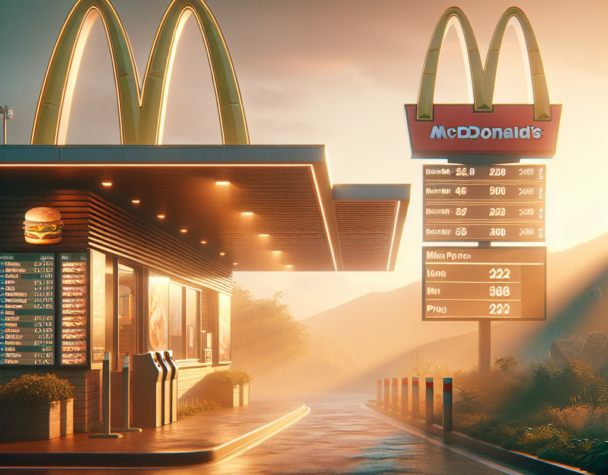
McDonalds DriveThru Revamp, Big Arch Returns 2026!
Wed, December 31, 2025Introduction
McDonald’s (MCD) closed the year with a few headline moves that directly affect its near-term operating outlook and investor sentiment. Recent trading volatility in late December combined with a set of operational and marketing initiatives for 2026 — from drive-thru modernization to standardized pricing and a marquee menu comeback — give clear, actionable signals about where the company is focusing resources to defend traffic and profits.
Late-December Stock Pressure and What It Signifies
On December 26 and again on December 30, McDonald’s shares slipped modestly during broader weakness in the Dow Jones Industrial Average. One late-December drop alone accounted for roughly a 27-point contribution to a nearly 125-point Dow decline, underlining how a DJ30 component like MCD can influence index moves in thin year-end trading. Institutional shifts also occurred: Boston Trust Walden reduced its MCD stake by roughly 7,800 shares at the end of December, a tangible example of cautious positioning.
Dividend and Capital-Return Profile
McDonald’s remains shareholder-friendly. The company paid a quarterly dividend of $1.86 per share in mid-December, continuing its history of regular increases and signaling capital-return discipline. That steady payout is an important stabilizer for income-oriented investors even as same-store sales and margins face cyclical pressures.
Concrete 2026 Operational Initiatives
Rather than vague strategy statements, McDonald’s announced a set of specific changes slated for rollout through 2026 that can affect throughput, customer experience, and pricing dynamics.
Drive-Thru Modernization
The company is moving ahead with an ambitious drive-thru revamp: adding extra lanes, deploying a “fast lane” for orders placed ahead of arrival, and making other layout changes at thousands of locations. With more than 27,000 drive-thru sites worldwide (about 13,700 in the U.S.), even incremental throughput gains can materially raise daily transactions and reduce service times — a direct revenue and cost-efficiency lever.
Technology, AI and Cashless Trends
McDonald’s is pairing physical upgrades with digital and AI investments. The company plans to accelerate AI-driven drive-thru and kitchen efficiencies (partnering with cloud providers) while expanding mobile ordering features like “Ready on Arrival” and a dedicated digital fast lane. A broader shift toward cashless transactions was also flagged, which streamlines operations but requires careful handling for demographic pockets that still prefer cash.
Standardized U.S. Pricing
One immediate operational change is enforcing standardized pricing across U.S. franchisees. That move aims to reduce consumer confusion from regional price disparities and protect brand trust — but it also introduces short-term menu-price friction as local marketing and franchise economics adjust.
Menu and Marketing: Big Arch and Digital Promotions
On the demand side, McDonald’s confirmed the permanent return of the fan-favorite Big Arch burger in early January 2026 and introduced new “secret menu” items. These product bets come alongside large digital promotions — notably the return of Monopoly — which helped drive app engagement. The company reported substantial digital traction, with tens of millions of active app users in the U.S. on a 90-day basis, reinforcing the digital-first customer acquisition strategy.
Pricing Versus Traffic
While premium limited-time offers and permanent menu winners can boost average check, they often come with price sensitivity trade-offs. The mix of promotions, standardized pricing, and value-oriented messaging will determine whether traffic growth can offset ongoing cost pressures from wages and food inflation.
Investor Takeaways
Recent moves are concrete and operationally focused, not speculative. For investors, the key points are:
- Short-term volatility: Late-December share weakness and institutional trimming reflect caution, but not structural panic.
- Defense through operations: Drive-thru expansion, AI efficiency, and mobile ordering are pragmatic ways to lift throughput and control labor costs per transaction.
- Revenue levers: Standardized pricing and menu event strategies (Big Arch, Monopoly) attempt to balance higher checks with traffic stimulation.
- Dividend resilience: The $1.86 quarterly payout maintains income appeal and signals management confidence in cash flow.
Conclusion
McDonald’s has translated recent market pressure into a set of tangible, near-term initiatives aimed at improving service speed, consistency, and digital engagement. These measures — while not a cure-all for macro headwinds like wage and commodity inflation — provide a credible operational path to protect margins and sustain traffic into 2026. For investors focused on consumer discretionary exposure within the DJ30, MCD’s moves are specific, measurable, and worth monitoring as execution unfolds.