
Barclays Lifts McDonald’s PT; Pokémon Spurs Sales!
Wed, January 14, 2026Introduction
McDonald’s (MCD) drew renewed analyst attention in early January 2026 when Barclays boosted its price target and emphasized the company’s promotional push. The upgrade centers on nostalgia-driven marketing, new menu initiatives, and the potential lift to average unit volumes (AUVs). Market reaction was positive but measured—MCD gained intraday while still trailing several peers. This article unpacks the Barclays rationale, the trading context, and what peers’ momentum means for McDonald’s near-term outlook.
Barclays Upgrade: Numbers and Rationale
Price target and analyst stance
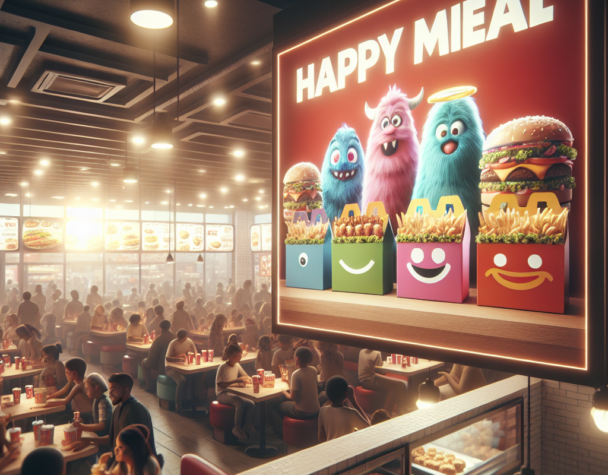
On January 8, Barclays raised its price target for McDonald’s to $372 and kept an “overweight” recommendation. The firm pointed to a series of brand-focused activations—most notably the relaunch of Pokémon Happy Meals with collectibles—as concrete levers to drive customer frequency and engagement. Barclays also cited upcoming global menu additions for 2026 as further potential upside for traffic and AUVs.
Why promotions matter for a scale player
Promotional campaigns can disproportionately benefit a franchised system like McDonald’s, where incremental traffic and higher average checks translate quickly into improved franchisee economics and stronger royalty income. Nostalgia-driven tie-ins (Pokémon) combine collectible appeal with family traffic, a segment that reliably boosts daytime and weekend visits.
Market Reaction and Peer Comparison
Trading snapshot
Following the Barclays note, McDonald’s recorded modest gains—about +1.55%—closing near $308.88. Trading volume that day sat around 3.2 million shares, slightly below its 50‑day average of roughly 3.3 million, suggesting incremental buying rather than broad conviction. MCD remains below its 52‑week high (near $326.32), approximately 5%–6% shy of that peak.
Relative performance versus peers
Despite the upgrade, McDonald’s underperformed some fast‑casual and quick‑service peers that day. Chains like Starbucks, Chipotle and Yum! Brands posted stronger percentage gains, reflecting uneven investor flows across the consumer discretionary space. That divergence highlights how investors are differentiating between value propositions: scale and consistent cash flow (McDonald’s) versus menu innovation and rapid recovery stories (some fast‑casual names).
Sector Signals: Chipotle’s Rebound and Sentiment Shifts
Chipotle as a bellwether
Analysts have recently called out Chipotle’s (CMG) turnaround—driven by limited‑time offers and value-oriented tweaks—as a notable demand recovery. While McDonald’s benefits from mass-market promotions, Chipotle’s bounce is attracting fresh investor attention and serves as a reminder that innovation at the menu level can quickly alter growth narratives across the group.
Implications for McDonald’s investors
Barclays’ call provides a tangible upside scenario tied to marketing execution and product cadence. For long-term investors, the case rests on McDonald’s ability to sustain traffic lifts from promotions, convert that into higher AUVs, and leverage its franchised model to expand margins. For traders, relative performance versus peers and sector rotations will likely determine near‑term price action.
Conclusion
Barclays’ upgrade to a $372 price target is a clear, analyst-backed catalyst for McDonald’s stock, anchored in promotional momentum and new menu initiatives such as Pokémon Happy Meals. The market’s tepid volume and the stock’s lag versus peers underscore ongoing investor selectivity in fast‑food names. Moving forward, execution on promotions and how McDonald’s stacks up against revitalized peers like Chipotle will be key determinants of whether the optimistic price target gains broader market traction.