
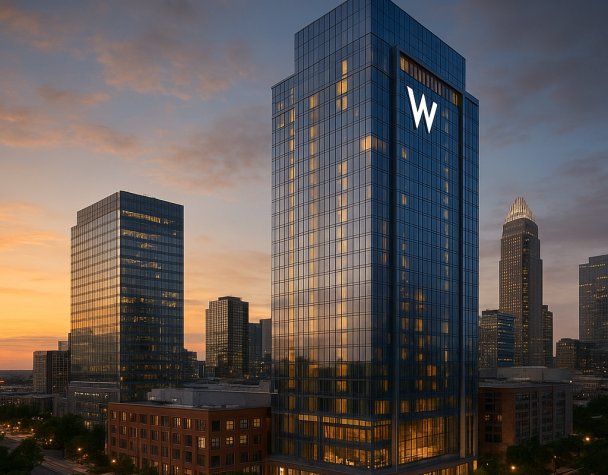
Marriott Expands Footprint with New W Hotel in Charlotte as Insider Families Divest
Sat, October 03, 2026Marriott International (NASDAQ: MAR) is making headlines on two fronts this week: the company is pursuing strategic expansion in Charlotte with a landmark W hotel development, while shareholder scrutiny intensifies as insiders divest substantial holdings.
New W Hotel Project in Charlotte
On September 9, 2026, Spandrel Development Partners revealed plans to convert the 400 South Tryon tower—a foreclosed 1970s office building in Uptown Charlotte—into a W hotel that will feature the city’s highest rooftop bar alongside 399 apartments. This project marks a significant addition to Marriott’s luxury lifestyle portfolio under the Marriott Bonvoy umbrella, reflecting continued momentum in high-end urban hospitality offerings. The conversion adds to Marriott’s active development pipeline and illustrates its strategy of urban repurposing and premier amenities.
This announcement was originally reported by Axios and highlights the company’s focus on blending lodging with mixed-use urban environments. The project underlines Marriott’s brand strength in lifestyle and luxury sectors.
Insider Share Sales Spark Investor Attention
Separately, public filings and market commentary indicate that three Marriott International insiders collectively sold $3.7 million worth of company shares in late September. Remarkably, one insider executed a sale amounting to $1.23 million on September 29, drawing scrutiny from observers and analysts alike.
These transactions, disclosed via a Reddit discussion referencing SEC activity, raise questions about the motivation behind the divestiture—whether tied to personal financial planning or sentiment about the stock’s future prospects. While insider sales are not uncommon, their timing often invites investor attention, particularly in the context of new development news like the Charlotte W hotel.
Implications for Investors
Marriott’s expansion into Charlotte’s urban luxury market positions it to capitalize on demand for lifestyle hospitality experiences. Such developments can drive long-term brand value, but progress is typically gradual as conversions and openings come to fruition.
Meanwhile, insider sales may warrant close monitoring. While not indicative of any underlying financial weakness, they can influence investor sentiment, especially when prominent insiders unload sizable positions around high-profile announcements.
What to Watch Next
Investors should track the timeline and execution of the W Charlotte project, including renovation milestones and expected opening dates. Additionally, any future insider trading disclosures—whether sales or purchases—could offer insight into executive sentiment regarding Marriott’s near-term trajectory.
Given the lack of a clear, immediate catalyst justifying stock movement, it’s prudent to separate the Charlotte development (a strategic, long-term enhancement) from short-term insider activity, and avoid assuming a justified cause-and-effect relationship without further confirmation.