
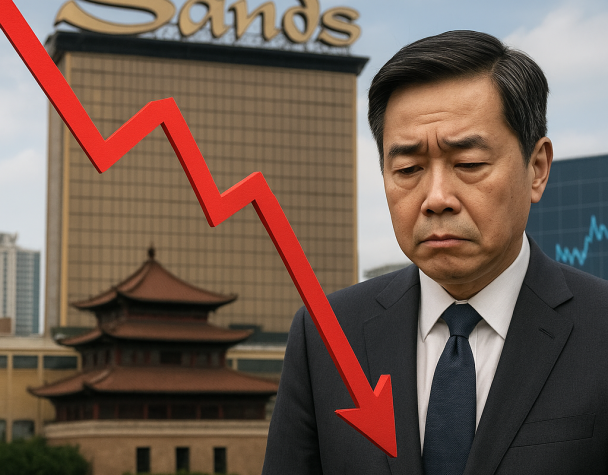
Las Vegas Sands Misses Q2 Estimates due to Macao Hold, Stock Holds Stable
Fri, September 11, 2026Las Vegas Sands (NYSE: LVS) reported second-quarter 2026 results that fell short of Wall Street expectations, driven in part by unusually low rolling‑play hold in its Macao operations.
For the quarter ended June 30, 2026, Las Vegas Sands posted adjusted earnings per share of $0.59, missing consensus estimates of $0.77, a shortfall of approximately 23.4 percent. Reported net revenues were $3.15 billion, falling roughly 6.4 percent below the expected $3.37 billion. Both figures declined modestly year over year—adjusted EPS from $0.79 and revenue from $3.18 billion—highlighting underlying softness in performance. According to the company, Macao’s adjusted property EBITDA dropped to $430 million from $566 million, with $87 million of that decline attributed to unusually low rolling‑play hold despite increased gaming volumes across mass and premium segments. Notably, Marina Bay Sands in Singapore saw mass gaming revenues rise 5 percent year over year to $886 million. These results weighed on investor sentiment, with the stock falling about 3.1 percent in after‑hours trading on the day of the earnings release.
While no direct stock price for the regular trading session was provided, the post‑earnings decline in after‑hours trading underscores investor concerns over the Macao performance drag—a region that has historically been a major earnings driver.
Why the Q2 Miss Matters
Macao continues to represent a volatile segment of Las Vegas Sands’ business due to shifting gaming patterns and hold rates—factors often beyond management’s control. The $87 million impact from low hold highlights the sensitivity of property-level EBITDA to gaming luck, even when volumes grow. Meanwhile, Marina Bay Sands in Singapore provided a modest bright spot, maintaining healthy growth in mass gaming revenue.
Investors will be watching closely for management commentary on hold trend normalization, efforts to diversify revenue sources, or actions to offset volatility in Macao. Any description of earnings trends or hold improvements will need to be verified by future company disclosures or reporting.
Looking Ahead
The significance of Las Vegas Sands’ Q2 results lies in the resurgence of volatility tied to gaming hold. Until hold normalizes, earnings may continue to face pressure, regardless of volume growth. Market-watchers should monitor upcoming earnings calls, operator commentary, and trends in gaming mix that could influence near-term results.
In summary, Las Vegas Sands’ disappointing Q2 performance—especially in Macao—underscores the ongoing challenges in its Asia operations and the importance of balance with other markets like Singapore. The degree to which management can manage or mitigate these variables will determine investor confidence going forward.
Stock note: As of September 10, 2026, LVS closed at $42.60, down 1.66 percent. This ongoing decline reflects both the Q2 miss and broader investor caution toward volatile gaming hold impacts.