
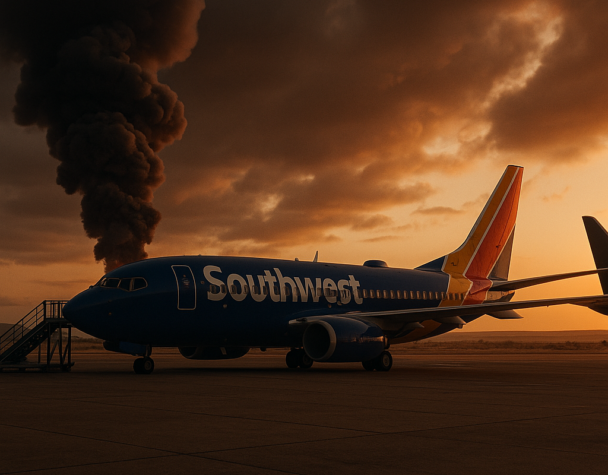
Southwest Shock: Fuel Spike and Board Turmoil Now!
Tue, March 24, 2026Introduction
Southwest Airlines (LUV) has faced a concentrated burst of headline risk over the past few weeks that directly affects its cost structure and investor confidence. Two discrete, verifiable developments — heightened geopolitical tensions that pushed oil and jet-fuel sensitivity into focus, and a boardroom shake-up involving Elliott Management–backed directors — combined to pressure the stock and raise questions about near-term earnings resilience and governance clarity.
Recent Events That Moved LUV
Fuel pressure from Middle East escalation
Early March reporting highlighted a spike in geopolitical risk after an escalation involving strikes and military activity in the U.S.–Israel–Iran axis. While Southwest does not have meaningful operational exposure in that region, global crude markets reacted, and jet fuel—one of the airline’s largest variable expenses—became an immediate risk factor.
For LUV, which operates a low-cost, high-frequency domestic network and competes heavily on price, rising jet-fuel costs are particularly consequential: the company has limited short-term ability to pass higher fuel costs through to price-sensitive leisure travelers without reducing demand.
Board resignations and the investor reaction
On February 11, Southwest experienced a pronounced sell-off after the resignation of two board members associated with activist investor Elliott Management and a board reduction from 13 to 11 seats. The market reaction—heavy trading and a steep intraday decline—reflected uncertainty about governance direction, oversight of strategy, and how activist engagement would shape long-term plans.
Investor interpretation was mixed: some view a streamlined board as a move toward faster decisions; others see the departures as a loss of constructive pressure that had been intended to accelerate performance improvements.
Why These Developments Matter to LUV Investors
Direct hit to margins: fuel sensitivity
Airlines’ operating margins are tightly linked to fuel costs. Even modest crude price moves translate into material swings in airline profitability. For Southwest, which favors low fares and high load factors over ancillary revenue, elevated fuel costs compress margins quickly. If crude remains elevated or more spikes occur, Southwest will face tougher choices: raise fares and risk volume declines, reduce capacity, or accept narrower margins.
Governance clarity and capital allocation
Board composition influences strategic decisions—fleet planning, route strategy, cost programs, and capital returns. The resignations inject ambiguity at a time when investors want clear signals on how management will navigate higher costs and sustain returns. Absent strong, communicative governance, the stock can experience episodic volatility tied to perceived strategic drift.
Key Indicators to Watch
- Jet-fuel and crude price trajectories — sustained rises increase downside risk to margins.
- Southwest’s quarterly guidance and fuel-hedging disclosures — these reveal management’s short-term cushion against price swings.
- Board announcements and investor communications — transparency on governance and strategic plans will influence sentiment.
- Traffic trends and load factors — demand resilience will determine pricing power during cost pressure.
Conclusion
Recent, concrete events—an uptick in geopolitical-driven fuel risk and a tangible governance shake-up—have combined to create near-term headwinds for Southwest Airlines (LUV). These forces affect the company through two channels: immediate cost pressure on margins and investor uncertainty about strategic oversight. Short-term investors should monitor fuel and company guidance closely; longer-term holders should seek evidence of governance stability and the company’s ability to translate strategic changes into improved unit economics.
Actionable clarity from Southwest on hedging, capacity and board composition will be the clearest signals that the company is managing both risks effectively.