
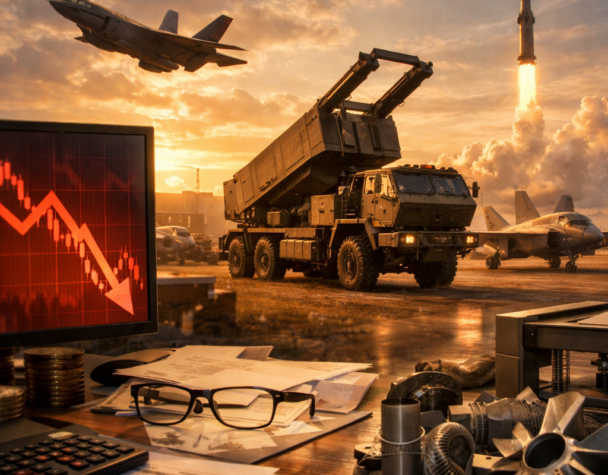
Lockheed Earnings Miss Sends LMT Shares Down
Tue, May 05, 2026Lockheed Earnings Miss Sends LMT Shares Down
Lockheed Martin (LMT) surprised investors with weaker-than-expected first-quarter results that drove a notable share-price decline. The company reported EPS of $6.44 versus street expectations of $6.74 and revenue of $18.02 billion versus an anticipated $18.38 billion. A negative free cash flow of roughly $291 million amplified investor concern, even as management reiterated full-year EPS guidance in the $29.35–$30.25 range. This article examines the concrete developments behind the move and the operational factors that continue to support Lockheed’s long-term outlook.
Earnings Shortfall and Market Reaction
Quarterly results in detail
The Q1 miss centered on a combination of revenue timing and near-term execution pressures. While the headline EPS and revenue shortfalls were modest in absolute terms, the negative free cash flow was the immediate catalyst for the market’s reaction. Analysts responded by adjusting estimates and price targets; consensus coverage still skews toward Hold ratings, with a mix of Buy and Hold recommendations and average 12-month targets in the mid-$600s.
Stock performance and valuation context
Following the earnings release, LMT shares fell roughly 11–12% in short order, underlining investor sensitivity to cash flow and delivery risk on large, complex programs. Despite the pullback from recent highs (roughly a 20–30% decline from peak levels), Lockheed’s forward price-to-earnings multiple remains near 17x—competitive versus many defense peers—while its backlog provides revenue visibility that many industrials lack.
Operational Wins and Program Tailwinds
HIMARS contract strengthens backlog
Amid the near-term financial disappointment, Lockheed announced a meaningful Army award for 17 M142 HIMARS launchers worth approximately $1.13 billion through 2028. That contract both increases near-term funded backlog and reinforces Lockheed’s role in high-demand tactical missile and launcher markets. The award exemplifies how continuing defense demand can offset short-term execution noise.
Manufacturing innovation: additive gains
Lockheed is accelerating adoption of laser powder-bed fusion additive manufacturing through partnerships with specialist suppliers. This technology shortens lead times for high-performance components and reduces reliance on traditional tooling. For complex systems—where supply-chain agility and precision materials matter—additive manufacturing is a practical lever to improve margins and responsiveness.
Balance Sheet, Backlog, and Analyst Views
Lockheed still carries a substantial backlog—reported near $186 billion—which provides multi-year revenue visibility and supports long-term cash generation once program execution normalizes. Several analysts trimmed near-term targets after the quarter, reflecting execution risk and cash-flow volatility, but many retained constructive longer-term views due to the company’s program mix and exposure to sustained defense spending.
What Investors Should Track
Concrete, non-speculative indicators that will drive sentiment include: quarterly cash-flow trajectory, award cadence for key platforms (missiles, aircraft, space systems), execution milestones on classified/complex programs, and integration progress on additive-manufacturing initiatives. Each of these items will materially affect near-term earnings and the stock’s path back to prior levels.
Conclusion
Lockheed’s recent earnings miss triggered a steep but explainable market reaction driven by negative free cash flow and modest revenue timing issues. Offsetting those near-term concerns are a large funded backlog, a $1.13 billion HIMARS award, and explicit investments in additive manufacturing that improve long-term program economics. For investors focused on fundamentals, the key questions now are execution and cash flow stabilization rather than demand—factors that will determine whether the pricing gap created by the sell-off represents a buying opportunity or a signal to remain cautious.