
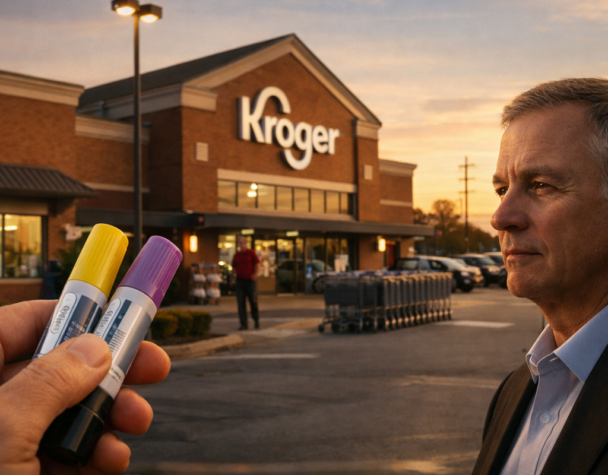
Kroger Boosts GLP-1 Pharmacy, CEO Signals Caution
Tue, March 31, 2026Kroger Boosts GLP-1 Pharmacy, CEO Signals Caution
Kroger (KR) dominated headlines this week after expanding access to a high-demand GLP-1 therapy while its new CEO tempered near-term expectations. These concrete developments—pharmacy product rollout and management’s cautious guidance—carry immediate implications for revenue mix, store traffic and investor sentiment. Below is a concise, evidence-based look at what changed, why it matters for KR stock, and how Kroger’s positioning compares with peers.
Key developments this week
Pharmacy expansion: Zepbound® KwikPen now available
On March 13, 2026, Kroger began offering Eli Lilly’s Zepbound® KwikPen at participating pharmacies, including manufacturer-sponsored savings programs to lower out-of-pocket costs for self-pay customers. Adding a GLP-1 injectable to store pharmacies addresses strong consumer demand for weight-management and metabolic therapies and helps drive repeat pharmacy visits—an important margin-enhancing channel for retailers trying to diversify beyond groceries.
Leadership tone: new CEO outlines cautious outlook
Greg Foran, who took over as Kroger CEO in February 2026, issued a restrained outlook in early March, citing pressures on consumer spending, elevated wage and input costs, and supply-chain and geopolitical uncertainties. That deliberate tone reduces the risk of overly optimistic guidance but can weigh on near-term sentiment as investors recalibrate expectations for same-store sales and margin recovery.
Why these moves matter for KR stock
Immediate revenue and traffic implications
GLP-1 therapies are high-margin pharmacy items that also generate ancillary sales in-store. By offering Zepbound and honoring savings programs, Kroger stands to increase prescription volumes and foot traffic—benefits that can amplify basket size and improve store-level economics. For investors, pharmacy growth is one of the clearest levers to lift Kroger’s top-line without relying solely on volatile grocery margins.
Sentiment and guidance impact
A cautious CEO outlook typically creates short-term pressure on a stock as analysts and investors reset earnings models. With Foran signaling prudence, KR may see increased volatility around upcoming earnings calls; however, measured guidance can also prevent downside surprises and support credibility over time.
Competitive backdrop and strategic advantage
Peers retrenching create opportunity
Major drug retailers have been shrinking store footprints: Walgreens has publicly accelerated closures, and CVS also reduced hundreds of locations in recent years. Those retrenchments leave potential white-space Kroger can exploit—especially where food and pharmacy convenience overlap. Kroger’s integrated grocery-pharmacy model positions it well to capture customers displaced by competitor closures.
Valuation and structural strengths
Analysts increasingly describe Kroger as a defensive, value-oriented play. KR trades at a discounted forward P/E (around 14.5x in current analyst snapshots) and yields roughly 2.0% on the dividend, attractive for income-focused investors seeking lower-correlation exposure. Operationally, Kroger produces a significant share of private-label goods (about 30%), which helps insulate margins from commodity swings and gives the company pricing flexibility during inflationary periods.
Investor takeaways
Kroger’s pharmacy move is tangible and revenue-relevant: adding GLP-1 injectables responds to robust consumer demand and can incrementally raise margin and traffic. At the same time, management’s cautious tone under new CEO Greg Foran tempers short-term expectations and could increase near-term volatility. The combination of expanding healthcare services, competitor store closures, and solid value metrics makes KR a compelling defensive stock for investors who prioritize steady cash flow with selective growth catalysts rather than pure growth narratives.
Conclusion
Recent developments give Kroger a practical playbook: monetize pharmacy demand (notably GLP-1 drugs), capture share where peers withdraw, and manage costs conservatively under new leadership. For stockholders, the near-term trade-off is between potential upside from healthcare-driven traffic and muted sentiment from guarded guidance. The net effect is a clearer, more defensible positioning for KR as a value compounder in the food and drug retail segment.
(Data points referenced: Zepbound KwikPen rollout March 13, 2026; CEO Greg Foran’s early 2026 guidance; peer store-closure trends; forward P/E ~14.5x; dividend ~2.0%; private-label production ~30%.)