
KMB: Ontario Warehouse Arson Shakes Kimberly-Clark
Tue, May 05, 2026Introduction
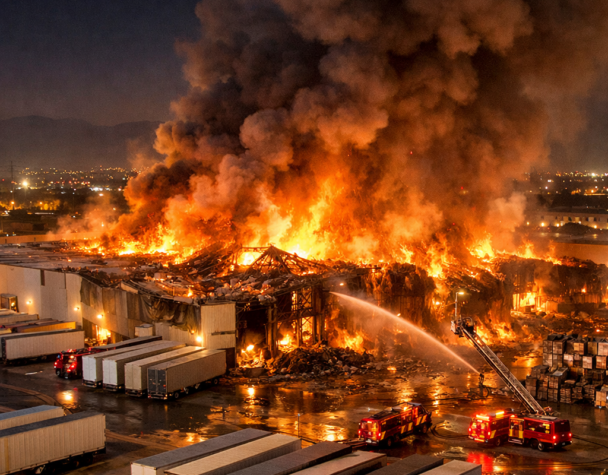
Kimberly‑Clark (KMB) faced a significant operational jolt when a large third‑party distribution center in Ontario, California was deliberately set ablaze. The incident — confirmed as arson — wiped out a massive logistics hub used to store and ship Kimberly‑Clark products on the U.S. West Coast. Investors and analysts reacted quickly, weighing the immediate impact on sales, supply chains and near‑term earnings against the company’s insurance coverage and contingency plans.
What Happened and Immediate Effects
On April 7, 2026, a roughly 1.2 million square‑foot warehouse serving as a Kimberly‑Clark distribution node was destroyed in a fire later deemed to be arson. Authorities have arrested a suspect reportedly linked to the site operator. Estimated property damage is in the range of several hundred million dollars. Company statements emphasize that no manufacturing facilities were affected and that no Kimberly‑Clark employees were harmed.
Scale of the disruption
The facility loss is material for regional logistics: analysts estimate it could represent approximately 3% of Kimberly‑Clark’s West Coast sales volume. That level of local inventory depletion can cause short‑term out‑of‑stocks or route adjustments for retailers, especially for fast‑moving consumer products where on‑shelf availability directly ties to sales velocity.
Corporate response
Kimberly‑Clark activated its business‑continuity protocols immediately, shifting shipments to alternate warehouses, re‑routing freight, and tapping third‑party logistics capacity. The company also anticipates coverage from property and business interruption insurance, which should blunt the financial hit to operating cash flows. Management has signaled that manufacturing runs were unaffected and that the focus is restoring distribution flow as quickly as possible.
Market and Analyst Reaction
Market sentiment turned cautious in the days following the fire. At least one major broker cited the incident as a reason to reassess KMB’s near‑term outlook and issued a downgrade, highlighting the potential for sales displacement and margin pressure as logistics costs rise temporarily. Share price movement reflected that concern, though much will depend on how quickly alternative distribution capacity can absorb displaced volume.
Why this matters to investors
For income‑oriented investors, Kimberly‑Clark’s long track record of dividend growth remains a central consideration: the company raised its quarterly payout to $1.28 per share earlier in the year. That financial stability provides a buffer for many shareholders against episodic operational shocks. For growth or momentum investors, the key signals will be the size and duration of any sales disruption and whether margin recovery is rapid or protracted.
Near‑Term Outlook and Key Dates
Near term, watch for management commentary in the upcoming quarterly results — specifically on April 28, 2026 — where the company is expected to provide more color on inventory replacement, insurance recoveries and any estimated hit to volumes or margins. Analysts will update models once management quantifies the impact and insurers begin to process claims.
Operational priorities
- Restoring regional distribution capacity via temporary or permanent warehousing.
- Reallocating production shipments to alternative transit lanes to minimize out‑of‑stocks.
- Working with retailers to prioritize shelf availability for higher‑margin or essential SKUs.
Conclusion
The Ontario warehouse arson is a concrete, proximate event that introduces short‑term operational disruption for Kimberly‑Clark. While the destroyed facility represents a meaningful logistics asset, the company’s immediate contingency actions, insurance coverage and intact manufacturing footprint reduce the likelihood of a long‑term earnings shock. Investors should monitor the company’s April earnings update for quantified impacts and watch how quickly logistics partners and insurers restore normal distribution flows.