
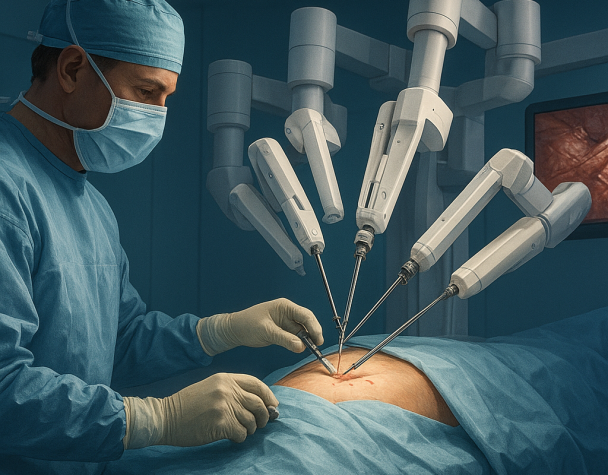
Medtronic Expands Hugo Clearance Into General Surgery, Raising Competitive Stakes for Intuitive Surgical
Tue, November 17, 2026Medtronic announced on November 17, 2026, that the U.S. Food and Drug Administration had cleared an expanded indication for its Hugo robotic-assisted surgery system. The clearance covers upper-abdominal general surgery procedures, placing Medtronic’s platform more directly against Intuitive Surgical’s da Vinci franchise.
The expanded U.S. 510(k) clearance includes procedures such as cholecystectomy, Roux-en-Y gastric bypass, ventral hernia repair and small-bowel resection, according to Medtronic. These procedures represent important areas of robotic-assisted surgery adoption and broaden the commercial scope of Hugo beyond its earlier applications.
Why the clearance matters for ISRG
Intuitive remains the leading publicly traded company focused on robotic-assisted surgery, but Medtronic’s regulatory progress increases competitive pressure in the market. A broader Hugo indication gives hospitals another platform to evaluate when purchasing or expanding robotic surgery capabilities, potentially making competition more relevant in capital equipment decisions and surgeon recruitment.
The development arrives as investors continue to assess Intuitive’s growth outlook following its third-quarter results and narrowed expectations for 2026 da Vinci procedure growth. Intuitive has also been managing scrutiny related to pricing, procedure trends and competition from other robotic-surgery manufacturers.
ISRG closed at $437.75 on November 16, 2026, down 1.49%, based on the specified market data. The share-price move should be viewed separately from Medtronic’s announcement because the available information does not establish that the FDA clearance caused the decline.
Competitive implications
Medtronic’s clearance does not mean that Hugo has displaced da Vinci or that hospitals will immediately switch platforms. Adoption will depend on clinical experience, surgeon training, hospital economics, service infrastructure, instrument availability and the range of procedures supported in practice.
For Intuitive, the announcement reinforces the importance of maintaining its installed base, expanding procedure volume and demonstrating value to hospitals. Its recurring revenue model depends heavily on the continued use of installed systems, while competitors may use broader regulatory clearances and pricing strategies to win new accounts.
Investors will likely monitor whether Medtronic converts the expanded clearance into meaningful hospital placements and procedure growth. Until adoption data emerge, the FDA decision is best viewed as a material competitive development rather than evidence of an immediate change in Intuitive’s market position.