
Intel's Stock Performance Amid Semiconductor Industry Volatility
Tue, July 07, 2026Intel’s Stock Performance Amid Semiconductor Industry Volatility
As of July 6, 2026, Intel Corporation’s (INTC) stock is trading at $122.20, reflecting a 0.3% decrease from the previous close. This movement aligns with recent fluctuations in the semiconductor sector, influenced by various industry developments.
Record-Breaking Quarter for Semiconductor Stocks
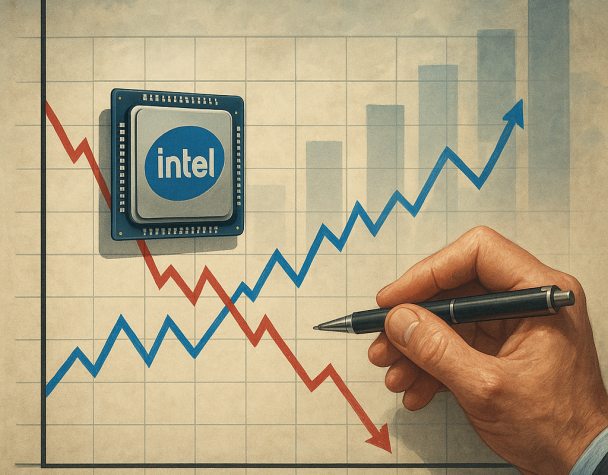
In the second quarter of 2026, semiconductor stocks experienced unprecedented growth. The Philadelphia Semiconductor Index surged by 87.8%, driven primarily by the escalating demand for AI technologies, which heavily rely on advanced chips. Notably, Intel’s stock rose by 216.4% during this period, underscoring its significant role in the AI-driven market expansion.
Industry Concerns Over Government Intervention
Major memory chip manufacturers, including Micron, Samsung, and SK hynix, have expressed apprehension regarding potential U.S. government intervention in the domestic memory chip market. The Semiconductor Industry Association (SEMI) cautioned that direct market interference could exacerbate existing shortages. Instead, SEMI advocates for alternative measures, such as tax deductions on consumer electronics, to mitigate the impact of rising chip prices.
Market Volatility and Recent Declines
Despite the remarkable gains in Q2, the semiconductor sector faced a sharp decline at the onset of Q3. On July 1, 2026, the Philadelphia Semiconductor Index dropped by 6.3%, signaling a reversal in momentum. Leading semiconductor firms, including KLA, Lam Research, and Applied Materials, experienced significant stock declines. This downturn highlights the inherent volatility in momentum-driven markets.
Intel’s Financial Performance and Strategic Investments
In April 2026, Intel reported robust first-quarter results, with revenues reaching $13.6 billion, a 7% year-over-year increase. The company attributed this growth to rising demand for data center-grade CPUs and improved manufacturing yields. Additionally, strategic investments, such as Nvidia’s $5 billion stake in Intel, announced in September 2025, have bolstered the company’s position in the AI chip market.
Conclusion
Intel’s stock performance reflects the broader trends and challenges within the semiconductor industry. While the company has benefited from the AI-driven demand surge, it must navigate market volatility and industry concerns over government policies. Investors should monitor these developments closely, as they will likely influence Intel’s future performance and the semiconductor sector at large.