
Intel Rally: NVIDIA Cash, High-NA EUV, Foundry Win
Wed, December 24, 2025Intel Rally: NVIDIA Cash, High‑NA EUV, Foundry Win
Intel’s stock momentum this week has been driven by a string of tangible events that directly affect its manufacturing capacity, capital position, and regulatory risk profile. Anchored by a cleared $5 billion investment from NVIDIA and the installation of ASML’s first commercial High‑NA EUV tool, Intel (INTC) is showing both technological progress and improved liquidity. At the same time, congressional scrutiny over testing of Chinese-linked tools and a delayed tariff implementation from the U.S. government introduce political overhangs that could shape operational decisions.
Why this week matters for INTC investors
For investors, these are not abstract press releases—each item has an immediate line of sight to factory throughput, capital availability, customer confidence, or regulatory risk. Together they influence revenue potential for Intel’s foundry ambitions, the path for advanced nodes like 14A, and the company’s ability to execute on its IDM 2.0 strategy.
NVIDIA’s $5 billion infusion: capital and signal
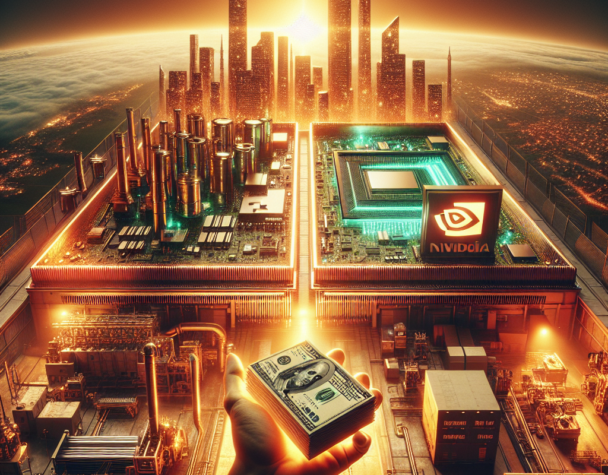
The U.S. agencies have cleared NVIDIA’s previously announced $5 billion investment into Intel. Beyond the cash itself, the approval removes a major antitrust uncertainty and signals strategic alignment between two of the largest players in chips and AI acceleration. For Intel, that capital boosts balance-sheet flexibility—helping fund capital expenditures, tooling, or foundry ramp costs that typically require multi-year investments.
Analogy: think of the investment as both a cash infusion and a business vote of confidence—much like a lead investor backing a turnaround CEO, it helps stabilize perception even before all operational gains materialize.
ASML High‑NA EUV installation: a tangible manufacturing step
Intel completed installation of ASML’s Twinscan EXE:5200B—the industry’s first commercial High‑NA EUV lithography tool. This machine offers higher resolution (enabling 14A ambitions), better overlay accuracy, and throughput improvements (reported up to ~175 wafers/hour in lab specs). That materially shortens the gap between research milestones and production readiness for advanced nodes, reducing the number of patterning steps and the associated yield complexity.
Practically, High‑NA equips Intel with a stronger chance to meet competitive performance/density targets and to attract customers seeking advanced node capacity—critical if Intel wants to win external foundry business from marquee clients.
Foundry prospects and customer talks
Reports this week suggest Intel is in discussions with large chip consumers including Apple, Google, Broadcom—and possibly even NVIDIA—for manufacturing and packaging business. If even a subset of those conversations convert into contracts, Intel’s foundry unit would gain recurring, high-margin volume and third-party validation.
What winning customers would change
Securing orders from major SoC and systems companies does two things: (1) it smooths the path to higher utilization of expensive fabs and tooling, and (2) it signals to other potential customers that Intel’s tech and schedule are credible. For investors, that could translate into revenue visibility and a re-rating of the stock’s growth prospects.
Regulatory and geopolitical headwinds
Not all news is purely positive. Reuters reported Intel tested wafer-etch tools from ACM Research, a supplier linked to Chinese entities of concern. While Intel says it is not using those tools in production and remains within U.S. export rules, Republican lawmakers have raised alarms and called for legislation to prevent U.S.-subsidized fabs from using equipment tied to certain Chinese firms. That scrutiny adds a regulatory overhang that could constrain supplier choices, slow tooling cycles, or require additional vetting costs.
Separately, the U.S. administration delayed new tariffs on Chinese semiconductor imports until June 2027. The postponement gives Intel more near-term operational clarity—reducing immediate trade-cost disruption risk—but also leaves a future uncertainty that management must monitor closely.
Longer-term tech bets: 2D transistors and future nodes
On the R&D front, Intel demonstrated a scalable approach to integrate 2D transistors into 300mm processes with imec. While commercialization is likely years out (late 2020s into the 2030s), this proof point reduces a key manufacturing barrier for next-generation transistor architectures. For long-horizon investors, it indicates Intel is investing in technologies that could sustain competitiveness beyond immediate node transitions.
Investment takeaways
Near term, NVIDIA’s cleared investment and the High‑NA tool installation are concrete positive catalysts for Intel’s operational runway and credibility in advanced manufacturing. Potential large foundry customers would be a major structural uplift if commitments are signed. Offsetting those positives are regulatory risks tied to tooling sources and the longer-term uncertainty around tariffs and supply-chain constraints.
For equity holders, these developments reduce some execution risk but keep political and regulatory factors squarely in play. Portfolio adjustments should weigh the improved capital and tech signals against the possibility of tighter rules on equipment sourcing or delayed customer ramps.
Conclusion
This week’s news gives INTC investors clearer, evidence-based reasons to reassess the stock: meaningful capital from NVIDIA, a milestone in lithography capability with ASML’s High‑NA tool, and reports of potential marquee foundry clients all point to progress. Simultaneously, congressional scrutiny over equipment testing and the still-pending tariff timeline introduce legitimate policy risks that could affect timelines and costs. The net outcome for Intel will hinge on the company’s ability to convert technology wins and partnerships into sustained production volume while managing regulatory constraints.
Intel’s trajectory is now shaped by a mix of tangible engineering milestones and proximate political decisions—both of which will matter to INTC’s next chapters.