
Analyst Ratings Reflect Mixed Outlook for General Mills Amid Declining Volumes
Sun, July 19, 2026Analyst Ratings Reflect Mixed Outlook for General Mills Amid Declining Volumes
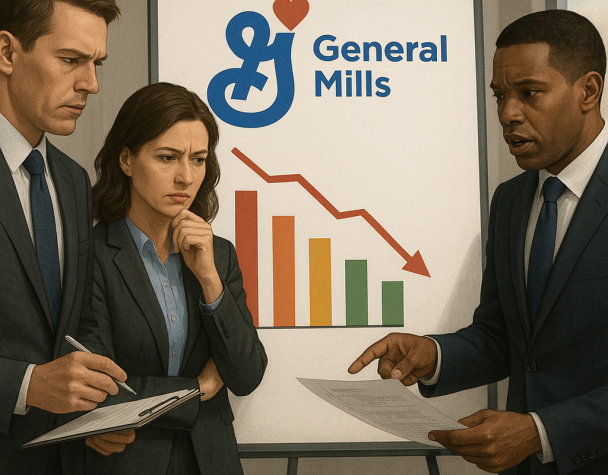
In recent months, General Mills (NYSE: GIS) has experienced a series of analyst evaluations reflecting differing perspectives on the company’s performance and future outlook. These assessments come amid ongoing challenges in sales volumes and strategic initiatives aimed at revitalizing growth.
Stifel Maintains ‘Buy’ Rating Post Q2 Earnings
Following the release of General Mills’ fiscal 2026 second-quarter results in December 2025, investment firm Stifel reaffirmed its ‘Buy’ rating on the company’s stock. The reported earnings per share (EPS) of $1.10 surpassed both Stifel’s projections and consensus estimates by $0.07, despite a 21% year-over-year decline on a constant currency basis. Stifel highlighted the company’s attractive price-to-earnings (P/E) ratio of 8.9, which is notably below market averages. The firm also noted that organic sales decreased by 1%, with flat volumes and a headwind from price/mix. Additionally, General Mills benefited from timing advantages in supply chain operations and North American Retail shipments, which are expected to reverse in the third quarter.
Bernstein Reiterates ‘Underperform’ Rating Amid Volume Concerns
In contrast, Bernstein SocGen Group reiterated an ‘Underperform’ rating with a $31.00 price target for General Mills in February 2026. This assessment followed the company’s fiscal 2026 fourth-quarter results, where sales aligned with expectations, and adjusted earnings before interest and taxes (EBIT) exceeded estimates by 11.8%. However, Bernstein attributed approximately half of this beat to the timing of trade expenses and retailer inventory benefits. The firm’s fiscal 2027 guidance was slightly below consensus, with organic sales growth projections 0.6% lower and adjusted EBIT around 1.3% below the midpoint of expectations.
Industry Context: Smithfield Foods’ Performance
Within the broader packaged foods and meats industry, Smithfield Foods reported first-quarter results in April 2026 that exceeded Wall Street estimates. The company maintained its annual forecasts, driven by steady demand for packaged meat products such as bacon, ham, sausages, and hot dogs. Smithfield’s diverse portfolio, including premium brands and private-label packaged meats, has helped retain budget-conscious consumers trading down, while growth in higher-margin, value-added packaged meats has supported profits. Private-label products accounted for roughly 40% of Smithfield’s retail sales in the last fiscal year.
General Mills’ Strategic Initiatives
In response to volume challenges, General Mills has been investing in consumer value, product innovation, and brand building. The company aims to restore volume-driven organic sales growth by enhancing its product offerings and engaging in strategic marketing efforts. Notably, the national launch of Blue Buffalo into fresh pet food is anticipated to contribute to growth in the latter half of calendar year 2025.
Conclusion
General Mills’ recent analyst evaluations underscore the complexities the company faces in navigating volume declines and market dynamics. While firms like Stifel express optimism based on financial metrics and strategic initiatives, others like Bernstein remain cautious due to volume concerns and conservative guidance. As General Mills continues to implement its growth strategies, stakeholders will closely monitor the company’s ability to achieve sustainable volume growth and enhance shareholder value.