
FCX: Grasberg Restart Q2 2026; Ownership Cuts Now!
Mon, March 23, 2026Introduction
Freeport-McMoRan (FCX) delivered several concrete updates this week that directly affect its production outlook and investor case. Management set a target to resume full-scale production at the Grasberg complex in the second quarter of 2026, formalized a restructured deal with the Indonesian government that secures long-term operating rights while reducing FCX’s economic interest, and disclosed a resolved U.S. safety order at the Henderson mine. Together, these events narrow near-term uncertainty but change the balance between stability and upside for FCX shareholders.
Grasberg restart: timeline and production implications
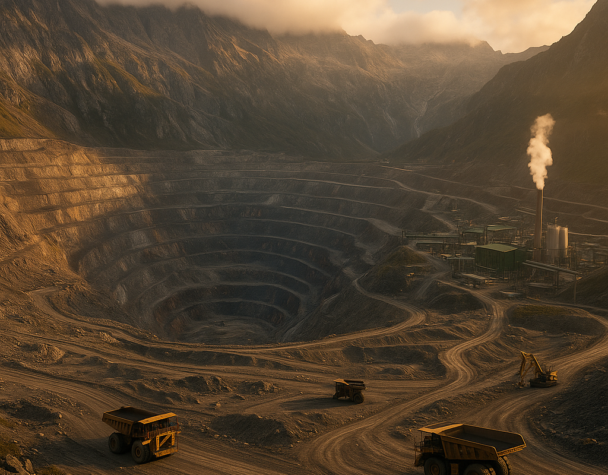
Freeport’s most consequential announcement is a clear restart timeline for Grasberg: full-scale operations are expected by Q2 2026. Grasberg is one of the world’s largest copper–gold complexes and has historically contributed a material share of Freeport’s output—the operation previously produced around 1.7 billion pounds of copper and roughly 1.4 million ounces of gold annually.
What the restart means for 2026 output
Freeport’s updated 2026 guidance reflects a conservative ramp: management projects approximately 1 billion pounds of copper and 900,000 ounces of gold for the year. That equates to roughly a mid‑30% reduction versus earlier forecasts tied to pre‑incident production levels. Investors should interpret this as improved visibility versus an open-ended disruption, but not yet a return to prior peak volumes.
Operational risks and execution focus
Restarting Grasberg is a complex, capital‑intensive effort involving remediation, underground stabilization, and permit conditions. Execution risk remains meaningful—delays, incremental remediation needs, or further regulatory hurdles could shift timing or scale. Think of Grasberg as the company’s locomotive: getting the engine back online materially affects Freeport’s forward earnings trajectory, but the journey requires careful engineering and steady oversight.
Indonesia deal: secured access, reduced economic upside
Concurrent with the restart timeline, Freeport reworked its arrangement with Indonesian authorities. The agreement secures long‑term operating rights through 2041, removing a major geopolitical overhang that has hung over FCX for years. However, the concession reduces Freeport’s economic stake in Grasberg—effectively trading upside for certainty.
Why the trade-off matters
For investors, the deal represents a clear trade: a stabilized asset base and lower sovereign risk versus diminished future earnings directly attributable to FCX from Grasberg. That trade can support a higher valuation multiple due to reduced tail risk but can also cap the company’s leverage to a full Grasberg recovery.
Domestic compliance note: Henderson MSHA order
Separately, Freeport disclosed an “imminent danger” order at its Henderson mine in Colorado after an observed safety violation (a worker on an elevated deck without fall protection). The company corrected the issue promptly, the order was lifted, and no injuries were reported. This episode highlights that, beyond headline international assets, operational and regulatory discipline across the U.S. portfolio remains important for risk assessments.
Conclusion
Last week’s developments for FCX are tangible and directional: a target of Q2 2026 for Grasberg’s full restart reduces ambiguity about timing, and the Indonesia agreement secures long‑term access while trimming FCX’s share of future Grasberg economics. The resolved MSHA order is a reminder that operational governance must be maintained at all sites. For investors, the narrative has shifted toward measured reassurance—lower tail risk but also less asymmetric upside from Grasberg—which should be factored into valuation expectations and risk management plans.