
Dover Hillphoenix Unveils Next-Gen CO2 Flex Mini
Mon, March 30, 2026Introduction
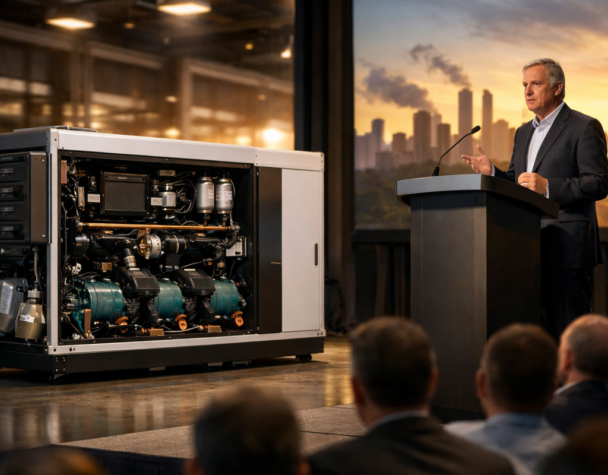
Dover Corporation (DOV) made two concrete moves this month that matter to shareholders: Hillphoenix, Dover’s food retail business, introduced a next-generation Flex Mini transcritical CO2 refrigeration system on March 4, 2026, and CEO Richard Tobin presented Dover’s outlook at the J.P. Morgan Industrials Conference on March 17, 2026. Both events underline Dover’s emphasis on higher-efficiency, low-carbon technologies and provide timely operational signals for investors tracking the Industrial Products & Machinery sector.
What Dover Announced
Next-Generation Flex Mini: engineering and product highlights
Hillphoenix’s new Flex Mini is a compact, scalable transcritical CO2 refrigeration platform designed for food retail and industrial applications. Key engineering features include improved energy efficiency through updated ejector technology, a service-friendly design with a filter-less oil separator, and modular compressor compatibility that supports multiple brands and configurations. The product also offers weather-resistant and sound-attenuated builds, addressing real-world deployment constraints for retailers in varied climates.
Corporate messaging at J.P. Morgan Industrials
At the J.P. Morgan Industrials Conference, Dover’s leadership reiterated the company’s strategic emphasis on climate-focused technologies and operational discipline. The presentation provided investors with management’s latest priorities on capital allocation, segment focus, and the roadmap for scaling technologies such as CO2 refrigeration across food retail and adjacent industrial markets.
Why these developments are meaningful
Commercial and regulatory tailwinds
The shift toward natural refrigerants like CO2 is being driven by efficiency standards and GWP (global warming potential) regulations—creating a growing addressable market for systems that reduce greenhouse gas impact. Dover’s Flex Mini directly targets that regulatory-driven demand with a compact, energy-efficient product suitable for retrofit and new store applications.
Operational implications for Dover
Technically differentiated products with lower lifecycle operating costs can command stronger commercial uptake and healthier margin profiles over time. The Flex Mini’s serviceability features reduce maintenance burdens for customers—an attribute that can accelerate adoption and shorten sales cycles. Combined with management’s messaging at a high-profile investor forum, these tangible product and communication steps help translate R&D into revenue visibility.
Investor takeaways
- Product validation: The Flex Mini is a concrete example of Dover moving from concept to market-ready solutions in sustainable refrigeration.
- Revenue mix potential: Broader adoption of transcritical CO2 systems could raise the average selling price and aftermarket revenue in Dover’s Food Retail segment.
- Execution focus: Management’s public remarks signal disciplined capital deployment and an intent to scale climate technologies with commercial rigor rather than speculative R&D promises.
Conclusion
The Flex Mini launch and the J.P. Morgan presentation are practical, non-speculative milestones that bolster Dover’s positioning in low-carbon refrigeration. For investors, the combination of a market-ready product and clear executive messaging narrows the execution risk profile and provides nearer-term catalysts to monitor: shipment cadence for the Flex Mini, initial fleet deployments, and any incremental revenue or margin commentary in upcoming earnings releases.