
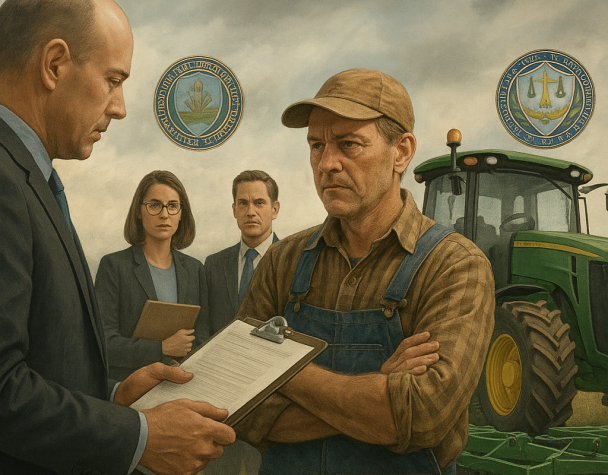
FTC and USDA Launch Inquiry into Agricultural Equipment Practices, Elevating Regulatory Risk for Deere
Tue, October 20, 2026In a significant development over the past week, the U.S. Department of Agriculture (USDA) and the Federal Trade Commission (FTC) have initiated a public inquiry into practices within the agricultural‑equipment manufacturing and distribution industry. This inquiry includes scrutiny of potential anticompetitive conduct and repair‑access restrictions, putting Deere & Company (NYSE: DE) directly in the regulatory spotlight.
According to MarketBeat, the inquiry targets industry distribution and repair practices, raising concerns about limitations imposed on farmers’ access to repairs and maintenance services. Deere is a central subject given its role and recent history with right‑to‑repair issues. The report highlights that this regulatory move adds to lingering concerns about weakening agricultural demand, though several potentially positive developments—such as partnerships and analyst upgrades—have attempted to counterbalance investor sentiment.
The FTC’s joint inquiry tops a growing list of regulatory pressures facing Deere. Investing.com notes that the announcement rattled investors already monitoring Deere’s previous right‑to‑repair settlement with the FTC. The renewed regulatory scrutiny triggered a broader sector‑wide sell‑off among peer agricultural‑equipment manufacturers, signaling the market’s sensitivity to these developments.
This approach from the USDA and FTC indicates a more active regulatory stance toward potential market‑power abuse or constraints on service accessibility. While Deere previously agreed to a right‑to‑repair settlement with the FTC, this new inquiry suggests regulators are drilling deeper into equipment distribution and repair ecosystems.
Why This Matters for Deere Investors
Regulatory inquiries—especially those involving federal agencies such as the FTC and USDA—can carry material implications for Deere’s operations, cost structure, and reputational standing. They may affect service offerings, legal compliance costs, and dealer relationships. Deere’s reliance on financial services, distribution networks, and service revenue streams underscores the potential significance of regulatory findings.
For investors, monitoring Deere’s response and the progression of this inquiry is crucial. While Deere’s ongoing product innovations and strategic initiatives may offer long‑term potential, this recent regulatory development poses an immediate and tangible risk that investors cannot overlook.
This event underscores renewed regulatory scrutiny in the agricultural‑equipment space, elevating risk considerations for Deere shareholders during a period of evolving market dynamics.