
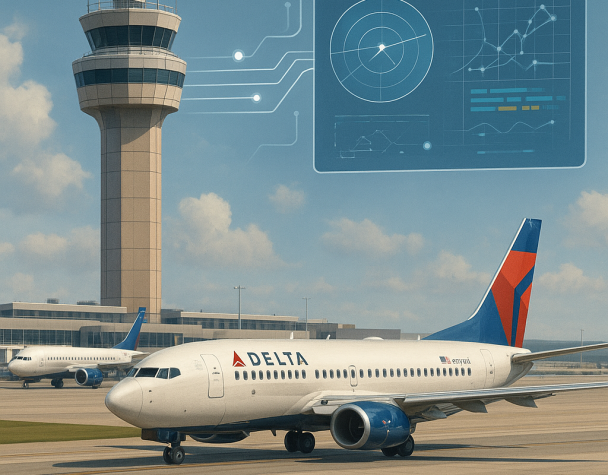
FAA’s SMART System Roll‑Out Could Alleviate Delays, Bolstering Delta’s Efficiency Outlook
Sat, September 26, 2026Delta Air Lines (NYSE: DAL) finds itself at the intersection of aviation and technology as the Federal Aviation Administration begins rolling out its SMART (Strategic Management of Airspace, Routes, and Trajectories) system this month—a development that may materially enhance flight scheduling and reduce delays.
On September 10, 2026, the FAA’s Administrator, Bryan Bedford, met with the CEOs of major U.S. passenger airlines including Delta, American, United, and Southwest to present the agency’s plan to begin deploying SMART this month. According to the FAA, the system uses predictive analytics to integrate data on airline schedules, weather, airport capacity and airspace conditions with operational constraints to forecast traffic flows and signal potential conflicts before they occur. The agency expects this to help airlines reschedule flights more effectively, especially those canceled due to adverse weather.
This initiative marks a tangible step toward modernizing the industry’s approach to air traffic management and could hold operational significance for Delta. If the SMART system meets its objectives, Delta could see improvements in schedule reliability, better adaptability to disruptions and a smoother recovery process from delays.
On the market side, Delta’s stock price stood at $84.94 as of September 25, 2026—a gain of 1.12% on that day. It remains unclear whether the rollout of the FAA’s SMART system has influenced this movement, as there is no explicit linkage reported between market behavior and the SMART development. As such, any assertion of causation would be speculative without further confirmation from market sources.
Why SMART Matters for Delta
Delta operates one of the largest and most complex networks among U.S. carriers. Enhancements in predictive scheduling—such as those promised by SMART—may translate into tangible benefits:
- Better delay management: The ability to anticipate schedule conflicts could allow Delta to proactively adjust flights, minimizing the ripple effects that occur when disruptions cascade.
- Operational flexibility: As weather and airspace bottlenecks evolve dynamically, a data‑driven and real‑time scheduling aid may help Delta adapt more rapidly.
- Customer experience: Smoother rescheduling and fewer delays can support Delta’s reputation for on‑time performance, a key competitive advantage.
What to Watch Next
With rollout starting this month, stakeholders—including airlines, regulators and passengers—will be monitoring how quickly SMART moves from pilot phase to routine adoption. Key indicators to follow include:
- Delta’s commentary on operational efficiency or delay metrics in upcoming quarterly results or investor communications.
- FAA guidance on SMART’s deployment schedule and integration with airline operations.
- Market analysts’ assessments of Delta’s operational resilience in response to SMART’s implementation.
Delta also announced last week that it will host a live webcast to discuss its September quarter 2026 financial results on Friday, October 9 at 10 a.m. ET. Investors should listen for any references to operational improvements or technology investments that could be linked to SMART or related efficiency initiatives.
As FAA’s SMART system begins to roll out, its success may become an important variable in the operational and strategic outlook for Delta—potentially translating into smoother workflows, enhanced customer trust and a strengthened competitive edge.