
Delta Stock Rises After Spirit Collapse, Fuel Risk
Mon, May 25, 2026Delta Stock Rises After Spirit Collapse, Fuel Risk
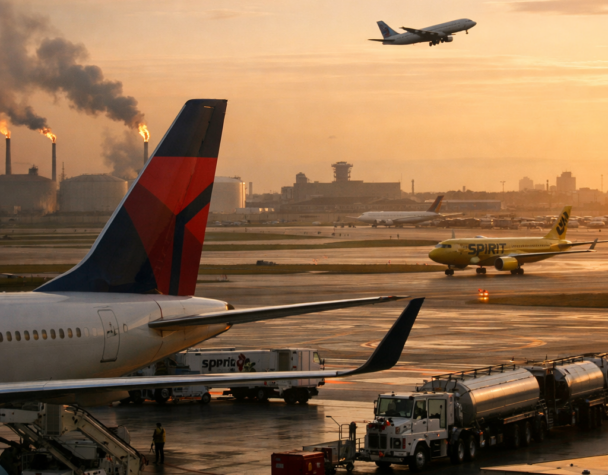
Delta Air Lines (DAL) has emerged as a focal point for investors this week as industry upheaval and cost pressures collide. The sudden shuttering of Spirit Airlines has created immediate capacity vacancies on leisure routes that larger carriers can fill, while persistent jet-fuel inflation and analyst earnings downgrades temper optimism. Institutional trading activity in DAL further signals active repositioning ahead of Q2 results and updated guidance.
Recent Catalyst: Spirit’s Exit and Delta’s Opportunity
Spirit’s abrupt shutdown
On May 2, 2026, Spirit Airlines halted operations after failing to secure additional funding, leaving a notable void on price-sensitive routes—especially in Florida and other leisure corridors. The immediate operational effect is a reduction in ultra-low-cost capacity, which typically exerts downward pressure on fares.
What this means for Delta
Delta, with a broad route network and stronger balance sheet, is well positioned to capture displaced demand. Expect the carrier to redeploy aircraft to key leisure markets, adjust fare offerings where competition has thinned, and potentially realize higher yields on certain routes. That said, gains from reduced fare competition are not automatic: network adjustments, slot constraints at congested airports, and timing of redeployments will determine how quickly revenue improves.
Headwinds: Fuel Costs and Analyst Revisions
Fuel-driven margin pressure
Major brokerages have revised airline earnings forecasts in recent weeks as elevated jet-fuel prices persist. Morgan Stanley, for example, lowered estimates citing sustained jet-fuel volatility and modeled higher-than-typical fuel assumptions for upcoming quarters. Geopolitical tensions affecting energy markets have contributed to route detours and longer flight times, adding to operating expense pressure.
Implications for Delta’s near-term results
Even if Delta captures incremental revenue from Spirit’s collapse, rising fuel expense can erode those gains. Investors should watch Delta’s fuel-hedging disclosures, unit cost guidance, and how management balances capacity deployment with margin preservation. Q2 guidance windows are likely to be wider as carriers incorporate volatile fuel assumptions into their outlooks.
Trading and Institutional Moves
Recent stock action
DAL attracted notable trading attention during this period. On May 22, 2026, shares closed in the mid-$70s, reflecting a mix of optimism over competitive dynamics and caution over costs. Short-term price moves have been influenced by headlines about industry consolidation and daily fuel-price swings.
Institutional positioning
Several institutional filings this week illustrate active portfolio adjustments: Pzena Investment Management reported a roughly $207 million stake in DAL; the North Dakota State Investment Board disclosed a smaller $1.55 million position; and other custodians showed reductions in exposure. These shifts suggest professional investors are rebalancing exposure as new information about capacity and costs emerges.
Key Indicators to Monitor
- Q2 guidance and unit revenues: Delta’s updates will reveal how quickly fare improvements from reduced competition are filtering into financials.
- Fuel-cost trajectory and hedging: Changes in jet-fuel prices and Delta’s hedging effectiveness will materially affect margins.
- Route redeployment cadence: Announcements about new or expanded leisure routes will indicate how aggressively Delta is capitalizing on capacity gaps.
- Institutional flows: Continued accumulation or liquidation by large investors will signal conviction levels behind recent price moves.
Conclusion
Delta stands at a crossroads where a clear near-term commercial opportunity—stemming from Spirit’s exit—meets significant cost headwinds from elevated jet-fuel prices. The balance between revenue upside from reduced ultralow-cost competition and margin squeeze from fuel will define DAL’s performance in the coming quarters. Investors should prioritize incoming guidance, fuel-cost disclosures, and concrete route redeployment updates rather than headline-driven speculation.