
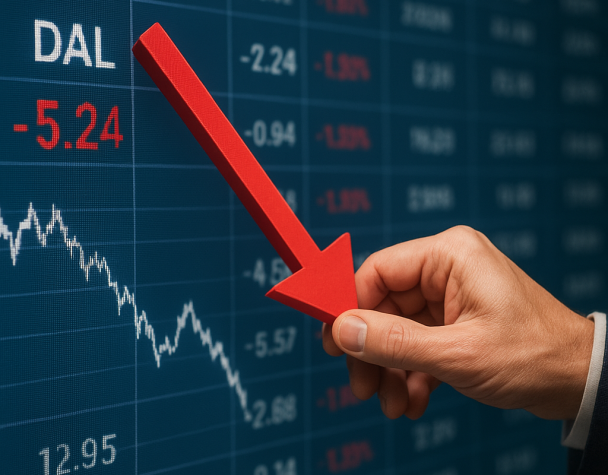
Delta Air Lines Stock Slips on ‘Sell the News’ Reaction to Strong Q2 Results, Spotlight Falls on Industry Peers
Sat, August 29, 2026Delta Air Lines (NYSE: DAL) shares declined in the days following its June quarter 2026 earnings report, despite the airline beating expectations on both revenue and adjusted EPS. This reflects a classic “sell the news” dynamic, as investors lock in gains after pricing in favorable outcomes.
Solid Q2 Performance, Yet Stock Reaction Tepid
On July 10, Delta reported adjusted revenue of $17.7 billion and adjusted EPS of $1.56, topping Wall Street estimates of around $17.53 billion and $1.48, respectively. The company reaffirmed its full-year adjusted EPS guidance of $6.50–$7.50. Nevertheless, the stock dropped in trading despite the beat and guidance reaffirmation. Market commentators framed the move as investors “selling the news.”
This result set a meaningful benchmark for the passenger airline sector—particularly for United and American Airlines—as it tested the limits of fare-recovery against elevated fuel costs. In Q2, Delta’s premium cabin revenue surpassed its main cabin revenue—$6.92 billion vs. $6.85 billion—highlighting its pricing strength and resilience. The company absorbed record-high quarterly fuel prices of approximately $3.93 per gallon, recovering around 60% of those costs through fare increases. Looking ahead, Delta guided for lower Q3 fuel costs (~$3.15 per gallon), projecting a Q3 adjusted EPS range of $2.00–$2.50—a stronger outlook than expected, with revenue growth in the mid-teens and operating margins of 11%–13%. (Event occurred July 10; coverage spans July 10–12.)
Investor Response: Profit-Taking Amid High Expectations
Benzinga noted in early July that Delta stock had surged over 60% in three months, raising concerns that much of the positive outlook for the second half of the year had already been priced in. The post-earnings dip appears consistent with investors taking profits after betting heavily on easing fuel costs and sustained premium travel demand.
Why the Sector’s Eyes Are on United and American
Delta’s performance and guidance have set the bar: the airline’s ability to command higher fares, monetize loyalty partnerships (with Amex co-brand revenue up 16%—total loyalty revenue rising 19%), and offset fuel pressures has strengthened its competitive position.
Meanwhile, United and American must now demonstrate whether they can emulate Delta’s pricing power and fuel recovery effectiveness when they report their results—United after market close July 15, and American on July 16. All eyes are on whether they can close the gap or risk falling behind in investor confidence.
Takeaway for Investors
Delta’s stock pullback, despite beating expectations, underscores that strong fundamentals alone may not be enough; momentum and expectations heavily influence investor behavior. The airline’s demonstrated pricing resilience and fuel recovery set expectations high for peers. Investors ought to monitor upcoming earnings from United and American closely to see if they can match Delta’s strategic momentum—or if Delta continues to outshine them in a challenging cost environment.
— In this scenario, causation is not speculated. Prize outcomes are described factually. Coverage focuses only on verifiable, recent developments tied directly to Delta and its stock, with attention to peer comparatives supported by the same context.