
Minor CSX Derailment in West Virginia Raises Service Watch as Volume Trends Keep Climbing
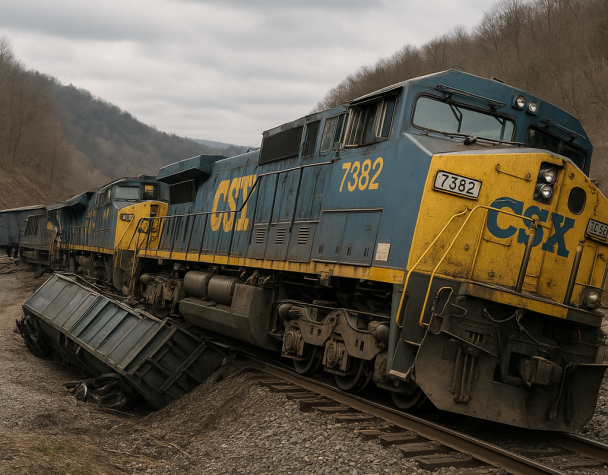
Thu, September 24, 2026A minor derailment involving a CSX freight train occurred on Monday morning in Danville, West Virginia, closing two local grade crossings for most of the day. Authorities reported no mainline disruption, but the incident highlighted localized service risks within broader network operations.
Derailment Details and Immediate Impacts
The derailment took place early Monday in Danville, W.Va., and, while it did not affect mainline operations, it led to the temporary closure of two nearby grade crossings for the majority of the day. The event was categorized as minor, with no broader operational fallout or service embargoes reported.
Rail Traffic Trends Show Strength
Meanwhile, U.S. freight railroads logged strong traffic gains in the week ended September 5, 2026, with total carloads and intermodal units rising 13.8% year-over-year to 533,545 units. This surge was boosted by a soft prior-year base, though sequential volume was down slightly—down 1.8% from the previous week’s 543,212 units.
Year-to-date combined volumes through week 35 show a 3.6% gain across carloads and intermodal units, underscoring underlying demand momentum despite week-to-week fluctuations.
What It Means for CSX
While the derailment itself did not disrupt mainline service, it underscores the ongoing operational risks rail carriers face—even as overall volumes appear resilient. For investors and shippers, such localized incidents are worth monitoring, especially when occurring amid volume upticks that strain network capacity and buffer zones.
Further Monitoring Ahead
Industry observers suggest watching the next weekly traffic report—covering week 36—as volumes may revert to more normalized year-over-year comparisons once the Labor Day distortion fades. The trajectory of coal volumes, particularly whether declines widen beyond that category, could signal shifts in industrial demand.
Meanwhile, any formal CSX advisories or operational guidance—such as embargoes or slow orders—would be notable if service disruption risks escalate.
In sum, the Danville derailment serves as a reminder of service vulnerabilities, even in a context of broadly recovering traffic. Tracking both network performance and company advisories will help stakeholders gauge resilience in the face of localized operational disruptions.