
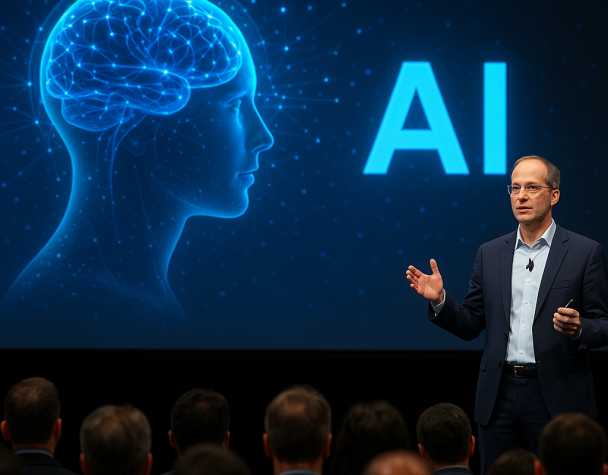
Salesforce Unveils Koa Reasoning Model and Expands AI Capabilities at Dreamforce 2026
Mon, September 21, 2026Salesforce introduced a suite of high-impact AI innovations during Dreamforce 2026, including its first homegrown reasoning model, Koa, alongside expanded AI services and a bold long‑term revenue goal—marking a pivotal step in the company’s evolution.
Launch of Koa and Strategic AI Upgrades
On September 15, Salesforce announced the launch of Koa, its inaugural enterprise reasoning model developed in partnership with NVIDIA’s Nemotron. This move represents a shift from reliance on third‑party AI and reinforces Salesforce’s strategy to internalize AI intelligence for its CRM platform.
In addition to Koa, Salesforce unveiled several new AI innovations including Agentforce enhancements, AIforce tools, and strengthened partnerships with AWS and Google Cloud to deliver more integrated, AI‑driven CRM experiences. These offerings are designed to embed AI deeply into workflows, enabling agents to operate more autonomously and contextually within enterprise processes.
Ambitious FY2030 Revenue Outlook
Alongside its AI product rollout, Salesforce reaffirmed an aggressive financial milestone: projecting FY2030 revenue north of $63 billion, surpassing analyst expectations by approximately 6 percent. This target underscores confidence in long-term growth fueled by AI‑intensive enterprise adoption.
The fiscal outlook is significant, as it positions Salesforce to capitalize on broader AI momentum, signaling to investors that the company expects sustained value creation in this evolving technological era.
Implications for Shareholders and the CRM Ecosystem
Salesforce’s strategic pivot to proprietary AI capabilities and its financial ambition may fortify its leadership in CRM and enterprise AI. By hosting AI inference on its own reasoning engine, Salesforce stands to enhance control over costs, performance, and differentiation in the market.
The FY2030 revenue target adds clarity to long-range investor expectations, potentially elevating valuation multiples if progress on AI monetization and adoption accelerates as planned.
Looking Ahead
Salesforce’s next steps will be closely watched: investors will assess early traction of Koa and Agentforce in customer deployments, monitor how AI integrations translate into incremental ARR, and evaluate execution against the FY2030 revenue benchmark.
As Dreamforce concludes, the company has laid down a technological and strategic marker. Its ability to deliver on these AI initiatives will be critical to sustaining momentum and reinforcing its position as an AI-first leader in the CRM industry.