
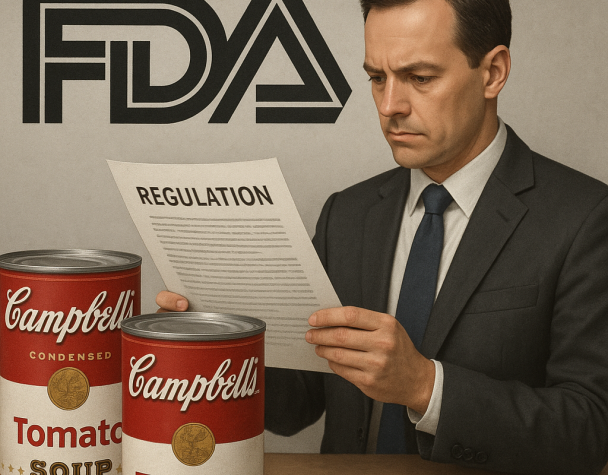
FDA's Proposed Ingredient Reporting Rule: Implications for Campbell's and the Food Industry
Sat, August 15, 2026FDA’s Proposed Ingredient Reporting Rule: Implications for Campbell’s and the Food Industry
The U.S. Food and Drug Administration (FDA) has recently proposed a new rule mandating that food companies report when ingredients are determined to be “generally recognized as safe” (GRAS). This proposal aims to replace the current voluntary notification program with a mandatory reporting system, addressing concerns about the lack of oversight in the GRAS system. The move comes as ultra-processed foods now constitute nearly 60% of Americans’ diets, raising questions about food safety and transparency.
Understanding the FDA’s Proposal
Under the existing framework, food companies can self-determine the safety of new ingredients without notifying the FDA, leading to potential gaps in oversight. The proposed rule seeks to close these gaps by requiring mandatory reporting when ingredients are deemed GRAS. However, the proposal stops short of requiring premarket or postmarket reviews of food products, a point that has drawn criticism from food safety advocates who argue that more stringent measures are necessary to ensure consumer safety.
Potential Impact on Campbell’s
Campbell’s, a leading player in the food and beverage industry, may need to adjust its compliance strategies in response to the FDA’s proposed rule. The company, known for its wide range of products under brands like Pepperidge Farm, V8, and Swanson, has historically navigated regulatory changes by adapting its product formulations and labeling practices. The new mandatory reporting requirements could necessitate additional documentation and transparency regarding ingredient safety determinations, potentially impacting product development timelines and operational processes.
Broader Industry Implications
The FDA’s proposal has elicited mixed reactions within the food industry. While some stakeholders appreciate the move towards greater transparency, others express concerns about the potential for increased regulatory burdens and associated costs. The food industry has also voiced opposition to the development of definitions for ultra-processed foods, warning that such measures could lead to consumer confusion and higher grocery prices. Any significant legislative changes stemming from the FDA’s proposal would ultimately require congressional approval, adding another layer of complexity to the regulatory landscape.
Conclusion
As the FDA moves forward with its proposal for mandatory ingredient reporting, companies like Campbell’s must stay vigilant and proactive in adapting to potential regulatory changes. The balance between ensuring food safety and managing operational impacts will be crucial for the industry. Stakeholders should monitor developments closely and engage in dialogue with regulatory bodies to navigate the evolving landscape effectively.