
Costco's Stock Faces Volatility Amid Analyst Downgrades and Valuation Concerns
Sun, July 12, 2026Costco’s Stock Faces Volatility Amid Analyst Downgrades and Valuation Concerns
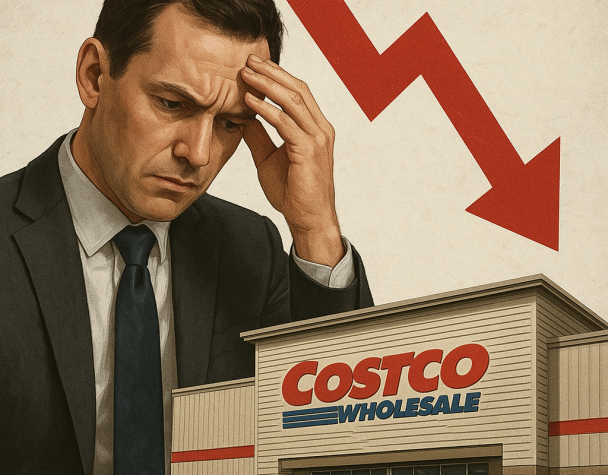
In the past week, Costco Wholesale Corporation (NASDAQ: COST) has experienced notable stock price fluctuations, primarily influenced by recent analyst actions and ongoing valuation concerns.
Analyst Downgrades Impact Stock Performance
On July 9, 2026, JPMorgan Chase & Co. adjusted its price target for Costco, reducing it slightly from $1,110 to $1,100, while maintaining an “overweight” rating. This revision contributed to a 4.6% decline in Costco’s stock price, with shares trading as low as $912.10 during the session. Despite this dip, the overall analyst sentiment remains positive, with 22 analysts rating the stock as a “Buy,” 11 as “Hold,” and one as “Sell,” leading to a consensus price target of $1,061.10. Additionally, other firms have recently raised their targets, indicating continued confidence in Costco’s performance.
Valuation Concerns Lead to Neutral Ratings
On July 2, 2026, Guggenheim reiterated its “Neutral” rating on Costco’s stock, citing valuation concerns despite the company’s strong sales momentum. Analyst John Heinbockel noted that while Costco has demonstrated robust top-line growth, the stock’s high valuation metrics, including a price-to-earnings (P/E) ratio of approximately 50.96, raise caution among investors. This perspective suggests that, despite operational strengths, the stock’s premium valuation may limit near-term upside potential.
Operational Strengths and Market Position
Costco continues to exhibit strong operational performance. In its first quarter of fiscal year 2026, the company reported an 8.2% increase in net sales, reaching $65.98 billion. Comparable sales growth was observed across various regions, with the U.S. experiencing a 5.9% increase, Canada 6.5%, and other international markets 8.8%. Additionally, digitally-enabled sales saw a significant rise of 20.5%, reflecting Costco’s successful adaptation to evolving consumer shopping behaviors.
Furthermore, Costco’s membership model remains robust, with a 90% tenured renewal rate for the fourth consecutive year. The company also continues its expansion efforts, operating 923 warehouses globally, including 633 in the United States and Puerto Rico, and maintaining a strong e-commerce presence in multiple countries.
Conclusion
While Costco’s operational performance and market position remain strong, recent analyst downgrades and valuation concerns have introduced volatility into its stock performance. Investors are advised to consider both the company’s solid fundamentals and the potential implications of its current valuation when making investment decisions.
As of July 10, 2026, Costco’s stock price stands at $916.25, reflecting a 0.27% increase from the previous close. The stock’s P/E ratio is 46.09, with earnings per share (EPS) of $19.88, and a market capitalization of approximately $407.21 billion.
Investors should continue to monitor analyst perspectives and company performance metrics to make informed decisions regarding Costco’s stock.