
Citizens Financial Faces Protests; Investors Watch
Mon, May 04, 2026Introduction
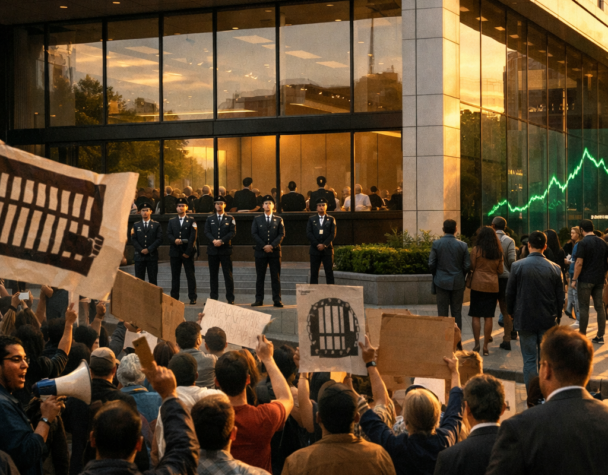
Citizens Financial Group (CFG) found itself at the center of intense public scrutiny after hundreds of demonstrators gathered outside the bank’s annual shareholder meeting in Providence on April 23–24, 2026. Activist groups demanded an end to financing for private-prison operators such as CoreCivic and GEO Group and signaled the possibility of deposit withdrawals as leverage. That episode adds a new, tangible dimension of risk for CFG at a time when broad equity indexes, led by the S&P 500, delivered strong gains in April.
What happened at CFG’s shareholder meeting
Who took part and why
Local and national advocacy organizations organized the protest under banners demanding that Citizens cease lending to companies operating immigration detention facilities. The demonstrations drew significant local attention and aimed to influence both public perception and shareholder sentiment by highlighting the bank’s ties to firms criticized for their role in immigration detention.
Key demands and tactics
Protesters presented a set of concrete demands: public commitments to end or restrict lending to specified private-prison operators, improved transparency on related lending practices, and stronger community-focused deposit protections. Organizers also warned of coordinated deposit withdrawals — a tactic intended to create short-term funding pressure and force policy responses from management and the board.
Why this matters to investors
Reputational risk with measurable consequences
Reputational issues that gain sustained media coverage can move beyond headlines and into balance sheets. For a retail-heavy bank like CFG, consumer trust underpins core deposit balances. If a meaningful number of customers act on protest calls to withdraw funds, the bank could face higher funding costs, temporary liquidity pressure, or the need to replace core deposits with more expensive wholesale funding.
Regulatory and governance implications
Activist pressure often attracts regulatory attention or triggers governance reviews, particularly when the subject touches public policy or human-rights concerns. Boards may be compelled to disclose lending policies, conduct third-party reviews, or adopt new ESG (environmental, social, governance) risk frameworks. Such steps can increase compliance and reporting costs and shift management focus away from growth initiatives.
Sector backdrop: S&P 500 strength
CFG’s headline risk has unfolded against a backdrop of strong equity performance; the S&P 500 posted record gains in April, contributing to broadly positive investor sentiment across financial stocks. That strength can mitigate short-term share-price volatility tied to company-specific controversies, but it does not eliminate the longer-term financial impacts of sustained reputational or regulatory pressure.
Investor implications and practical actions
- Monitor deposit flows and liquidity guidance: Watch CFG’s quarterly disclosures for signs of deposit attrition or changes in the cost of funds.
- Track board and management responses: Public commitments, policy updates, or third‑party reviews are signals of how seriously the bank views the issue.
- Assess peer behavior: Compare how other regional banks respond to activist pressure to gauge potential competitive and regulatory ripple effects.
- Evaluate ESG integration: Investors should review CFG’s ESG reporting for any gaps or planned enhancements that could reduce future operational and reputational risk.
Conclusion
The protests at Citizens Financial’s shareholder meeting crystallize a risk vector that goes beyond immediate headlines: reputational pressure that can translate into deposit shifts, heightened regulatory scrutiny, and additional governance costs. While robust S&P 500 performance in April provides some offsetting momentum for financial stocks, CFG’s near-term investor outlook will depend on the bank’s transparency and the effectiveness of its response. Active investors should watch deposit trends, public commitments from management, and any formal policy changes that follow the demonstrations.